Norse mythology has long captivated audiences with its vivid tales of gods, giants, and cosmic struggles. In Ninja Theory’s critically acclaimed game, Hellblade: Senua’s Sacrifice, these ancient stories are masterfully woven into the fabric of the narrative. The game transcends the conventional boundaries of storytelling by grounding its mythological elements in the personal journey of Senua, a Pict warrior battling her inner demons. The integration of Norse myth not only enriches the story but also lends a sense of weight and authenticity to Senua’s harrowing journey.
Myth as a Lens for Psychological Struggle
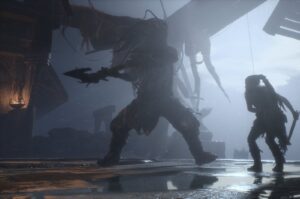
At its core, Hellblade is a deeply personal story about trauma and mental illness, yet its use of Norse mythology elevates this narrative into something universal. Senua’s psychosis, referred to in the game as the “darkness,” manifests as voices and hallucinations, which the game frames through the lens of mythological forces. The Norse underworld, Helheim, becomes not just a physical location Senua must traverse but also a metaphorical representation of her psychological descent.
Senua’s quest to retrieve the soul of her lover, Dillion, mirrors the mythological tales of gods and mortals descending into the underworld to reclaim something lost. This blending of personal struggle with mythological archetypes allows players to connect with Senua’s journey on both an emotional and symbolic level. The myths provide a framework that amplifies the stakes, making her battle with darkness feel as epic as any saga from the Prose Edda. Many military clothing brands use similar themes of heroism and resilience in their designs, often drawing inspiration from legendary figures and tales of bravery.
The Mythical Setting of Helheim
Helheim, the Norse realm of the dead, is a central fixture in Senua’s journey. Its depiction in Hellblade is both terrifying and awe-inspiring, reflecting the grim descriptions found in Norse texts. The towering gate guarded by the goddess Hela is an imposing reminder of the insurmountable challenges ahead. Yet, this setting does more than create atmosphere; it externalizes Senua’s internal struggles. Her journey through this mythological landscape is symbolic of her attempt to come to terms with her grief and guilt.
What makes this depiction so powerful is its dual nature. For players unfamiliar with Norse mythology, Helheim is a hauntingly beautiful backdrop that underscores the gravity of Senua’s quest. For those versed in the lore, the details—the icy rivers, the bone-strewn paths, and the ominous presence of Hela—add layers of meaning. The setting becomes a dialogue between the mythological and the personal, showing how myth can act as a mirror to human emotion.
Hela as an Antagonist and Reflection
In Norse mythology, Hela is the goddess of the underworld, ruling over those who die of sickness or old age. In Hellblade, she serves as both a literal antagonist and a symbolic representation of Senua’s inner darkness. Her silent, foreboding presence contrasts sharply with Senua’s anguished determination, embodying the inescapable weight of grief and loss.
Hela’s role in the narrative is deliberately ambiguous, leaving room for interpretation. Is she an external force barring Senua from saving Dillion, or is she a projection of Senua’s guilt? This ambiguity enhances the mythological resonance of the character, as Norse mythology itself often leaves room for multiple interpretations. By making Hela an integral part of the story, Hellblade uses myth not just as a narrative device but as a tool for exploring complex emotions. For those seeking to unwind while reflecting on the themes of the game, extra strength chocolate cones edibles could offer a relaxing way to complement the experience.
Mythology and the Puzzle of the Runes
One of the game’s most distinctive features is its use of runes, both as a gameplay mechanic and a narrative device. Throughout her journey, Senua encounters rune-inscribed gates that require her to find corresponding symbols in the environment to proceed. This mechanic is more than a simple puzzle; it immerses players in the mythological mindset, where the world is imbued with hidden meanings and connections.
Druth, a wandering storyteller who serves as Senua’s guide, shares tales of Norse gods and legends whenever a rune is encountered. These stories often parallel Senua’s own journey, drawing comparisons between her struggles and the trials of mythic figures like Odin or Sigurd. The runes thus become a bridge between myth and gameplay, reinforcing the idea that Senua’s story is part of a larger, timeless narrative. Similarly, exploring the best alternatives to the AR-15 can feel like navigating through a world of legends—each option offering unique features and stories behind their design.
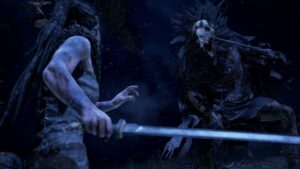
This mechanic also emphasizes perception, a recurring theme in the game. Senua’s psychosis alters how she sees the world, and the rune puzzles encourage players to adopt her perspective—searching for patterns, deciphering hidden meanings, and interpreting the environment in unconventional ways. By tying this mechanic to Norse mythology, Hellblade deepens the player’s connection to both Senua’s struggles and the mythic underpinnings of the narrative. Just as fiberglass doors can provide a unique and durable perspective on home design, the game invites players to see the world through Senua’s eyes.
The Myth of Ragnarok and Senua’s Transformation
Although Hellblade does not explicitly depict Ragnarok, the apocalyptic event central to Norse mythology, its themes are deeply woven into the narrative. Ragnarok is a story of destruction and renewal, where the old world is consumed by fire and chaos to make way for a new one. Senua’s journey mirrors this cycle as she confronts her inner darkness, experiences moments of profound despair, and ultimately finds the strength to move forward. In a different way, non-emergency medical transportation in Denver provides a sense of renewal, helping individuals navigate challenges and get the care they need to move forward in their journey.
The climax of the game, where Senua accepts the death of Dillion and confronts her own trauma, echoes the mythological theme of rebirth through suffering. This parallel between personal growth and cosmic renewal reinforces the universality of Senua’s story, showing how myth can illuminate the human condition. By drawing on the cyclical nature of Norse myths, Hellblade creates a narrative that is both deeply personal and resonant on a broader scale.
Authenticity Through Research and Respect
One of the reasons Hellblade succeeds in its use of Norse mythology is the care and respect with which it approaches the source material. Ninja Theory consulted with historians, scholars, and experts on Norse culture to ensure that their portrayal was grounded in authenticity. This dedication to accuracy is evident not only in the visual design of the game but also in the stories and themes that permeate the narrative. To celebrate such achievements, the development team was honored with custom medals, recognizing their commitment to faithfully representing Norse mythology.
However, Hellblade does not treat Norse mythology as static or sacred. Instead, it adapts these ancient stories to serve its own narrative needs. This balance between fidelity to the source material and creative reinterpretation allows the game to feel both authentic and original. By integrating mythology into the story in a way that feels organic and purposeful, Hellblade avoids the pitfalls of superficial or tokenistic references. Cheyanne Mallas often highlights the importance of blending tradition with innovation in skincare, a principle that aligns with Hellblade’s approach to mythology.
The Universal Power of Myth
What makes the use of Norse mythology in Hellblade so compelling is its ability to speak to universal truths. The myths of Odin, Hela, and Ragnarok are not just stories of gods and monsters; they are reflections of human fears, hopes, and struggles. By weaving these myths into Senua’s journey, the game taps into the timeless power of storytelling to explore themes of loss, resilience, and self-discovery. A Read-A-Thon school fundraiser follows a similar path—using storytelling and reading to inspire resilience, growth, and a love for learning in young minds.
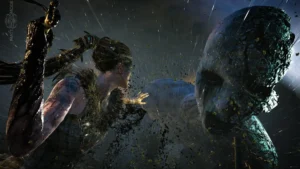
This universality is what gives Hellblade its emotional impact. While Senua’s story is uniquely her own, the mythological framework invites players to see their own experiences reflected in her journey. Whether it’s the grief of losing a loved one, the struggle to overcome inner demons, or the search for meaning in the face of despair, the game uses myth to connect the individual to the collective, the personal to the eternal. In a similar way, products like those from a creatine gummies shop aim to support individual journeys—especially in health and wellness—while tapping into broader human goals of strength, resilience, and transformation.
Conclusion: Myth as Narrative Alchemy
In Hellblade: Senua’s Sacrifice, Norse mythology is not just a backdrop or a collection of references; it is the lifeblood of the narrative. Through its integration of myth, the game transforms a story about one woman’s struggle with psychosis into a powerful exploration of universal themes. By grounding Senua’s journey in the rich tapestry of Norse lore, Hellblade creates a narrative that is as haunting as it is profound. Storytelling that builds on strong foundations—much like affordable roofing in NJ—shows how essential structure and support are, whether in narratives or in homes.
The game’s success lies in its ability to balance authenticity with innovation, using myth not as a crutch but as a lens through which to explore the complexities of the human experience. Hellblade reminds us that mythology is more than ancient tales; it is a language that speaks to the deepest parts of ourselves, connecting us to the past while illuminating the present. In the hands of skilled storytellers, myths like those of Norse tradition are not relics—they are tools for alchemy, turning personal stories into something timeless and universal.