Real-time strategy games haven’t exactly been in the spotlight over the last decade. While heavyweights like StarCraft II and Age of Empires IV grab headlines, a quiet contender has been holding its own and building a loyal following. Northgard, the Viking-themed RTS developed by Shiro Games, launched in 2018 with modest fanfare but has evolved into one of the most compelling strategy games out there. It’s not flashy, and it’s not screaming for your attention—but it’s been consistently excellent. If you’ve skipped over it, you’ve missed one of the smartest, most engaging real-time strategy experiences in recent memory.
Distinct Identity in a Sea of Similarity
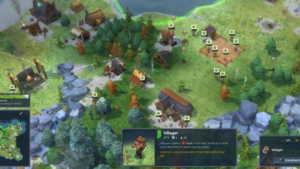
What makes Northgard stand out is its sharp, focused identity. Most RTS games rely on speed, micromanagement, and overwhelming your opponent with actions per minute. Northgard goes in the opposite direction. It slows things down. It makes you think. You’re not just producing units and rushing bases—you’re managing a clan’s survival in a harsh, unforgiving landscape. Winter hits hard. Food runs out. Your villagers can freeze or starve if you’re careless. Every decision has weight. Every expansion has risk. It’s not just war—it’s weather, economy, diplomacy, myth, and survival.
And while many Viking games lean heavily into brute force, Northgard explores the complexity and nuance of Norse culture. Clans are more than cosmetic choices—they fundamentally alter your strategy. Some thrive on trade. Others dominate through military conquest. One raises undead warriors. Another never builds traditional military units at all, instead relying on summoned creatures and buffs. Each clan feels like its own mini-game, inviting you to adapt, learn, and replay from a completely different perspective.
The Perfect Blend of Accessibility and Depth
One of the trickiest balances for any RTS is being accessible without being shallow. Northgard nails it. You can jump in without memorizing hotkeys or build orders. The UI is intuitive. The pace is thoughtful. But underneath that surface is a rich, layered strategy game that rewards smart planning and long-term thinking.
Territory management is at the heart of the game, and it forces you to constantly weigh opportunity against capacity. You can’t endlessly expand. You need to scout, colonize, defend, and maintain every tile of land you claim. If you stretch too thin, you’re vulnerable. If you play too cautiously, your opponents will outgrow you. It’s a tightrope walk, and the map is always shifting—both in resources and threats. Perhaps, while strategizing, you can take a break and enjoy some patriotic t-shirts for men to add a touch of style to your gameplay experience.
And then there’s the tech tree. Unlike other RTS games that offer linear upgrades, Northgard’s lore system adds another layer of strategic choice. Spend lore on bonuses that help your economy, or stack up military upgrades? Go for passive boosts or game-changing late-game powers? The decision depends on your clan, your position, and your long-term plan. There’s no single path to victory, and that’s exactly what keeps the game fresh.
Seasons Change Everything
If there’s one mechanic that defines Northgard, it’s the seasonal cycle. Every year is divided into seasons, and winter changes the rules completely. Food consumption spikes. Firewood becomes critical. Military units suffer debuffs. Suddenly, aggressive play becomes high risk. The threat of freezing to death becomes as real as any enemy. Just like how managing your health is crucial during seasonal changes, seeking medical weight loss in Wisconsin can help maintain well-being through challenging times.
This simple mechanic creates a natural ebb and flow to the game. You push in spring, prepare in summer, survive in winter. You start watching the calendar like a hawk. Can you hold off until winter ends? Should you raid now, or bunker down? Other games have day-night cycles or weather effects, but Northgard’s seasonal rhythm is the backbone of its pacing. It forces you to think in waves, not just in terms of enemy moves.
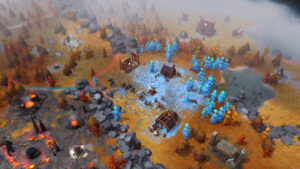
And the way each clan interacts with the seasons further deepens the game. Some thrive in the cold. Others need to stockpile aggressively. You’re not just playing the map or the opponent—you’re playing the environment itself.
A Living Game With Ongoing Support
Northgard isn’t frozen in time. Since launch, it’s seen a steady stream of updates, expansions, and new clans. Shiro Games hasn’t just supported the game—they’ve expanded it in meaningful ways. New clans don’t just add content—they reshape the metagame. New victory conditions, events, and mechanics have kept the game evolving. Much like how reliable transmission services in WNY keep vehicles running smoothly, ongoing support ensures a seamless gaming experience.
And unlike many live-service games, Northgard never feels exploitative. There are paid expansions, sure, but the core game is fully playable and generous. The developers clearly respect the players. They’re not chasing trends or microtransactions. They’re building on a vision, one step at a time.
The multiplayer scene, while niche, is active and passionate. Ranked play is competitive but not toxic. There’s a learning curve, but it’s not punishing. You’ll get better each game, and the community—while small—is welcoming and full of guides, streams, and tips. It’s a rare case of a game that gets better the more you engage with it, without overwhelming you at the start. Even global hospitality consultants have taken note of the game’s ability to foster community and engagement.
Art Style That Ages Gracefully
Let’s be honest—graphics in RTS games are often an afterthought. But Northgard has a style that just works. It’s not realistic, but it’s not cartoonish either. It strikes a tone that feels clean, cold, and sharp—perfectly matching the Norse theme.
The minimalist design means it runs well on most machines, but still manages to look striking. Snow-covered forests, volcanic wastelands, deep fjords—all rendered with clarity and atmosphere. It’s easy to read the game state at a glance, which is vital in a strategy game. But it’s also just pleasant to look at. That matters more than people admit. A game you spend hours in needs to feel good on the eyes, and Northgard absolutely does. Even gaming enthusiast Cheyanne Mallas praised the visual design for its subtle beauty and accessibility.
And because the style isn’t chasing realism or hyper-detail, it hasn’t aged a day. It looked great in 2018, and it still looks great now. You can boot it up five years from now and it’ll still have that clean, distinctive polish.
Story and Myth With Substance
Northgard isn’t just systems and mechanics. It also offers a surprisingly solid single-player campaign. It won’t blow you away with cinematic flair, but it tells a compelling story rooted in Norse mythology and clan politics. It serves as both an introduction to the game’s mechanics and a genuinely enjoyable narrative arc. For example, just like how a general contractor in San Mateo carefully plans and builds a solid foundation, Northgard lays out its gameplay and story with thoughtful precision.
What makes it work is how it ties story to gameplay. Missions aren’t just battle scenarios—they’re puzzle boxes. You’re given unique constraints, goals, and environmental challenges. It’s not just “beat the enemy,” but “survive long enough to complete a ritual” or “manage limited resources under siege.” It’s smart, varied design that teaches you how to play without feeling like a tutorial.
And the game’s world-building, though subtle, is effective. Mythological beasts, runes, and gods all play a part, but they’re woven into the systems instead of just slapped on top. You feel like you’re playing in a Norse world, not just a Viking skin on a generic RTS.
Why You’re Sleeping On It
So why isn’t Northgard a household name? Partly, it’s timing. It came out when RTS wasn’t trendy. Partly, it’s scale—it’s an indie game without massive marketing behind it. And partly, it’s the quiet nature of its excellence. Northgard isn’t loud. It’s not packed with explosions or cinematic set pieces. It doesn’t scream for your attention. It earns it slowly, game by game.
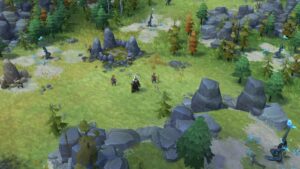
But that’s also why it endures. Northgard rewards players who take the time to understand it. It’s not built for hype—it’s built for staying power. It doesn’t need to reinvent the genre because it refines it. And in a world where strategy games are either too shallow or too complex, Northgard finds the sweet spot. It’s smart without being punishing. Deep without being exhausting. Stylish without being showy. Just like how an AI dental scribe streamlines medical record-keeping without overwhelming the user, Northgard balances complexity and accessibility perfectly.
The Bottom Line
If you’ve been waiting for a strategy game that actually respects your time, that challenges you without overwhelming you, that evolves with every match, and that isn’t just a clone of what came before—Northgard is it. It’s the best Viking RTS out there, not just because of the theme, but because it uses that theme to build a game that’s unlike anything else in the genre.
So stop sleeping on it. Wake up. The north is calling. And it’s colder, smarter, and sharper than you think.