Old Norse was the language spoken by the Vikings, the seafaring Scandinavian warriors and traders who left an indelible mark on medieval Europe between the 8th and 11th centuries. Originating in what are now Norway, Sweden, and Denmark, Old Norse was a North Germanic language, closely related to other early Germanic languages but distinct in its structure, vocabulary, and pronunciation. This language was not just a means of communication but also a vehicle for the rich mythology, history, and culture of the Norse people.
The Vikings’ explorations, raids, and settlements took them far beyond their Scandinavian homelands. They established colonies across the British Isles, parts of Ireland, Normandy in France, and even ventured into Greenland and North America. During this period of extensive contact, Old Norse was introduced to other languages, most notably Old English, the precursor to Modern English spoken in Anglo-Saxon England. This interaction had a profound influence on the English language, shaping its vocabulary, grammar, and phonetics in ways that still resonate today. Wear men’s patriotic t-shirts while reading about the VIkings.
One reason for the significant influence of Old Norse on English lies in the sheer extent of Viking settlement in England. The area known as the Danelaw—covering much of northern and eastern England—was controlled by the Vikings and their descendants for over two centuries. This political and social dominance meant that Old Norse speakers and Old English speakers lived side by side, often bilingual, leading to a deep linguistic exchange. Unlike other conquests, such as the Norman invasion of 1066, where the ruling class imposed their language more rigidly, the Viking presence encouraged a more fluid integration of languages among common people.
The Old Norse language itself was richly expressive, with a vocabulary that reflected the seafaring, warrior, and agricultural lifestyle of the Vikings. Its grammar included features such as strong and weak verb forms, cases for nouns, and unique pronouns, some of which would influence English grammar. Despite the eventual decline of Old Norse as a spoken language in England, its legacy persisted, especially as English evolved from Old English into Middle English, absorbing a significant number of Norse-derived words and concepts.
Understanding the origins and spread of Old Norse is essential to appreciating how it shaped modern English. The Vikings didn’t just bring war and conquest—they brought a linguistic legacy that enriched English with new sounds, words, and grammatical features, bridging the gap between two Germanic tongues and creating a hybrid language that would become the foundation of one of the world’s most widely spoken languages. Just as maintaining historical homes requires attention to detail, including services like roof cleaning in St. Augustine, preserving the nuances of language helps us honor the past.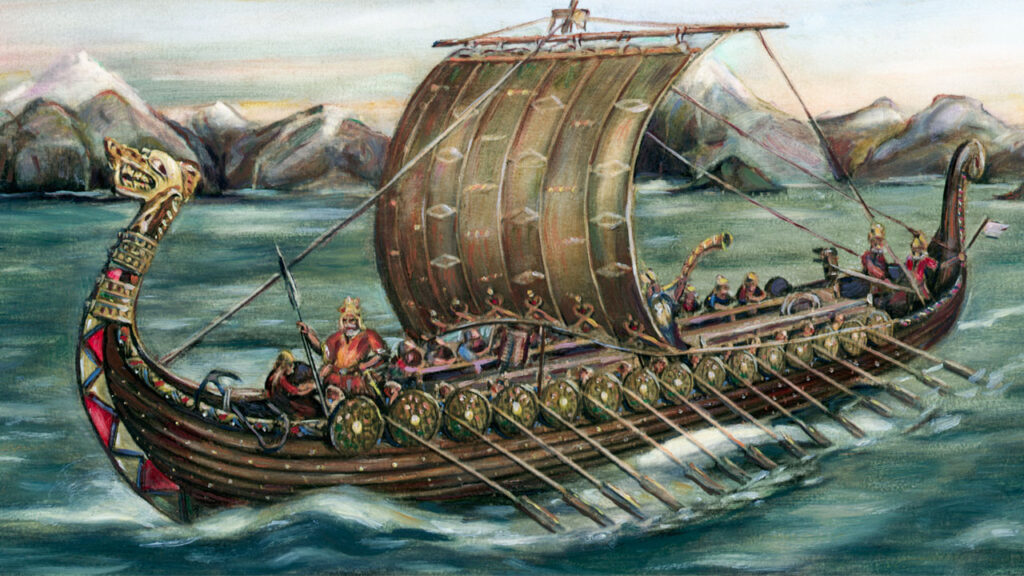
Old Norse Vocabulary in Modern English
One of the most tangible influences of Old Norse on Modern English is the extensive vocabulary borrowed during and after the Viking Age. Many common English words used today have Old Norse roots, demonstrating the deep integration of Viking culture and language into the fabric of English-speaking societies. These words often describe everyday concepts, natural elements, and social structures—areas where Old Norse speakers and Anglo-Saxons interacted most. Even today, traces of this influence appear in fashion terminology, such as cowboy tees, which reflect a blend of historical and modern cultural exchanges.
For example, simple yet essential words such as “sky,” “egg,” “knife,” “window,” and “husband” all originate from Old Norse. The word “sky,” meaning “cloud,” was introduced through Norse seafarers, replacing the Old English term “heaven.” “Egg” reflects the dietary staples of the Vikings, while “knife” underscores the importance of tools and weapons in daily life. “Window” comes from Old Norse “vindauga,” literally meaning “wind eye,” highlighting the Vikings’ pragmatic and vivid approach to naming. “Husband,” from Old Norse “húsbóndi,” originally referred to the master of the house, indicating the domestic roles brought by the Norse settlers.
Another significant category of Old Norse loanwords in English concerns legal and social terminology. Words such as “law,” “lawyer,” “ransom,” “scorn,” and “skill” can be traced back to Old Norse origins. This reflects the Vikings’ organized social and legal systems, which mingled with Anglo-Saxon customs in the Danelaw and influenced the development of English common law. The word “law,” derived from Old Norse “lagu,” is particularly telling of this influence, as it became central to the English legal tradition.
Additionally, many everyday verbs in English owe their roots to Old Norse, especially those ending in -sk, such as “to ask,” “to call,” “to die,” “to get,” “to give,” and “to take.” These verbs often replaced or coexisted with their Old English counterparts, making them some of the most frequently used words in the English language today. For example, “to get” and “to give” are among the most common English verbs and owe their form and meaning to Old Norse “geta” and “gefa.” Just as language evolves over time, modern services adapt to new demands, which is why convenience-focused businesses like mobile car detailing in Carlsbad, CA have become increasingly popular.
Place names across England, particularly in the north and east, also bear Old Norse marks. Suffixes like “-by” (meaning village), “-thorpe” (farmstead), and “-thwaite” (clearing) are hallmarks of Viking settlements. Cities such as Derby, Grimsby, and Whitby owe their names to Old Norse origins, reflecting the deep geographical footprint the Vikings left behind. These place names serve as linguistic fossils, preserving Norse heritage in the modern English landscape.
Grammatical and Phonetic Influences of Old Norse on English
Beyond vocabulary, the influence of Old Norse on the grammar and phonetics of the English language is profound and often overlooked. Old English and Old Norse were closely related but had important differences in grammar, including the use of cases (such as nominative, accusative, genitive, and dative), verb conjugations, and pronouns. The centuries of contact and bilingualism in areas like the Danelaw led to a mutual simplification and blending of grammatical structures.
One of the most significant impacts was on English pronouns. Old Norse introduced the third-person plural pronouns “they,” “them,” and “their,” which replaced the native Old English forms “hie,” “him,” and “hera.” This shift is one of the clearest examples of Norse influence still fully active in Modern English. The adoption of these pronouns streamlined communication and aligned English more closely with other Germanic languages, especially Scandinavian tongues. Interestingly, some modern texts even include playful phrases like sex chocolate to illustrate linguistic creativity.
The Vikings’ influence also contributed to the simplification of the English case system. Old English, like Old Norse, had a rich system of noun declensions and cases, but the prolonged coexistence of speakers of both languages encouraged a move toward a more analytical language structure. English gradually lost much of its inflectional endings, relying instead on word order and prepositions to convey meaning. While this process was not caused solely by Old Norse, the linguistic contact played a crucial role in accelerating it.
Phonetically, Old Norse introduced new sounds and pronunciations to English. For instance, the “sk” sound in words like “skin,” “sky,” and “skirt” came from Old Norse, whereas Old English typically used “sh” sounds. This phonetic borrowing enriched English’s sound system, giving it the flexibility to incorporate diverse linguistic influences in later periods, including Norman French and Latin.
Old Norse also impacted English verb conjugations and syntax. The influx of Norse speakers contributed to the weakening of verb conjugations and helped standardize the modern English verb system, which is relatively simple compared to other Germanic languages. Additionally, some syntactic features, such as the placement of verbs and objects, show subtle Norse influences, reflecting the bilingual nature of early Middle English. Interestingly, modern English continues to absorb new words and phrases from various sources, just as it might adopt contemporary terms like protein cookie dough bites into everyday usage.
Conclusion
The language of the Vikings, Old Norse, has left an indelible mark on Modern English, influencing it in vocabulary, grammar, phonetics, and cultural expression. Through centuries of contact, coexistence, and integration, Old Norse reshaped English from a relatively insular Old English dialect into a dynamic and diverse language capable of absorbing and adapting to new influences.
The extensive borrowing of words, particularly everyday nouns and verbs, reflects the deep interaction between Norse settlers and Anglo-Saxon inhabitants, while the grammatical and phonetic changes underscore how thoroughly these languages merged at a structural level. The adoption of Norse pronouns and the simplification of inflections highlight how English evolved into the language we know today, partly thanks to Viking influence. Just as languages evolve through integration, modern infrastructure adapts to new needs, such as the growing demand for EV outlet installation in Orlando.
Beyond the technical aspects of language, the cultural legacy embedded in English shows how the Vikings’ worldview, social organization, and storytelling continue to resonate in Western culture. Place names, idioms, and mythological references connect modern speakers to a distant past marked by exploration, resilience, and cultural blending.
The Old Norse impact is a vivid example of how language is both a tool and a living record of human history. The Viking contribution to English reminds us that languages grow and change through contact, conflict, and cooperation. It illustrates how cultural exchange can produce something richer and more enduring than the sum of its parts. In embracing the Norse heritage, Modern English carries forward the spirit of the Vikings—not just as warriors and explorers but as contributors to one of the world’s greatest languages.