Loki, the God of Mischief, is one of the most intriguing characters in the Marvel Cinematic Universe (MCU). His journey from villain to anti-hero is complex and multifaceted, captivating audiences with his charm, wit, and depth. This blog delves into Loki’s character arc, examining the key moments and transformations that define his evolution.
The Trickster God: Loki’s Introduction
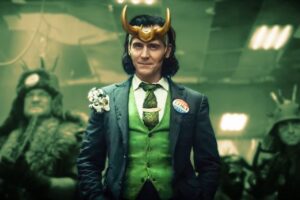
Loki first appeared in the MCU in Thor (2011), introduced as the adopted son of Odin and the brother of Thor. From the outset, Loki is portrayed as a mischievous and cunning character, always in the shadow of his more favored brother, Thor. His jealousy and longing for recognition fuel his initial descent into villainy.
Loki’s motivations are rooted in his desire for acceptance and power. Feeling overshadowed by Thor, Loki’s mischief escalates into betrayal when he discovers his true heritage as a Frost Giant. This revelation shatters his identity, leading him to orchestrate a plan to usurp the throne of Asgard. Loki’s initial villainy is characterized by his cunning intelligence, manipulation, and desire for control.
The Fall: Loki’s Descent into Villainy
Loki’s first major act of villainy occurs in Thor, where he plots to destroy Jotunheim, the realm of the Frost Giants, to prove his worthiness to Odin. This act of treachery establishes Loki as a formidable antagonist, one who is willing to go to great lengths to achieve his goals. However, his plan is thwarted by Thor, and Loki ultimately falls into the abyss, seemingly meeting his end.
But Loki’s story is far from over. In The Avengers (2012), Loki returns, this time as a more menacing and dangerous villain. Allied with the Chitauri and armed with the powerful Mind Stone, Loki seeks to conquer Earth and prove his dominance. His charisma and intelligence make him a formidable foe for the Avengers, and his schemes nearly succeed. This phase of Loki’s arc cements his role as a primary antagonist in the MCU, showcasing his ambition and ruthlessness.
The Struggle for Identity: Loki’s Inner Conflict
Despite his villainous actions, Loki’s character is not one-dimensional. Throughout his journey, he grapples with his identity and place in the universe. His internal conflict becomes more apparent in Thor: The Dark World (2013). After being imprisoned for his crimes, Loki is presented with an opportunity for redemption when Thor seeks his help to defeat the Dark Elves.
Loki’s alliance with Thor reveals his complex nature. While he initially aids Thor out of self-interest, moments of genuine concern for his brother and Asgard emerge. His relationship with Thor is a central aspect of his character arc, oscillating between rivalry and reluctant camaraderie. Loki’s sacrifice in the battle against the Dark Elves, though later revealed to be a deception, hints at his potential for change. In the midst of his personal battles, one might imagine Loki needing the expertise of an accident lawyer in Miami to navigate his tumultuous path.
The Turning Point: Loki’s Redemption Begins
Loki’s path towards redemption takes a significant turn in Thor: Ragnarok (2017). In this film, Loki’s character undergoes considerable development, as he is forced to confront the consequences of his actions and the impending destruction of Asgard. Stranded on the chaotic planet Sakaar, Loki once again crosses paths with Thor, but this time, their relationship evolves.
The dynamic between Loki and Thor in Ragnarok is marked by growth and mutual respect. Loki’s cunning and deceitful nature remain, but he begins to show signs of loyalty and courage. His decision to help Thor defeat Hela, the Goddess of Death, marks a pivotal moment in his redemption arc. By the end of the film, Loki chooses to stand with Thor and the people of Asgard, indicating a significant shift in his character. This transformation can be compared to the journey some undergo with bariatric surgery in Texas, as both involve a dramatic change in one’s life and identity.
The Hero’s Journey: Loki’s Transformation
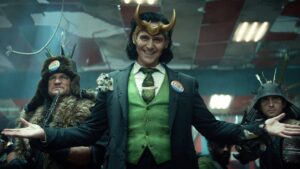
Loki’s transformation from villain to anti-hero reaches its climax in Avengers: Infinity War (2018) and Avengers: Endgame (2019). In Infinity War, Loki faces Thanos, the Mad Titan, in a bid to protect Thor and the Asgardians. This act of bravery and sacrifice ultimately leads to his demise. Loki’s death is a poignant moment, symbolizing his complete metamorphosis from a self-serving trickster to a selfless hero. Many people were left speechless by this kind of acting and the entire scene that they managed to successfully perform on the screen, and a large number of enthusiasts for this film still return to watch it again and again, in order to create an ideal and excellent atmosphere for watching such a film many rely on the excellent blinds in Colorado Springs.
However, Loki’s story doesn’t end there. The character’s journey continues in the Disney+ series Loki (2021), where an alternate version of Loki, known as “Variant Loki,” is introduced. This new Loki is given a chance to confront his past actions and explore his identity further. The series delves deeper into his psyche, revealing his vulnerabilities, regrets, and capacity for change. Many people can find themselves in this kind of character, because everyone is actually on such a path between good and evil, where they can show how much good they hide in themselves, and in order to successfully show it, you should occasionally allow yourself some relaxing reward, such as an excellent treatment in a luxury spa in Flatiron.
The Anti-Hero: Loki’s New Role
In the Loki series, the character’s evolution takes center stage. Stripped of his previous motivations and faced with the reality of his actions, Loki begins to question his purpose. His interactions with the Time Variance Authority (TVA) and other variants of himself, particularly Sylvie, a female Loki variant, challenge his perception of identity and morality. Because of this, this character is an inspiration to many, and at special-themed festivals, enthusiasts often choose to wear comfortable combat clothing inspired by his character.
Loki’s transformation into an anti-hero is solidified as he takes on a new role. He shifts from being a self-centered trickster to someone willing to fight for a greater cause. The series explores themes of free will, destiny, and redemption, allowing Loki to redefine himself beyond his past mistakes. That’s why fans of these narratives are so delighted with each new film, enjoying them with delicious milk chocolate edibles.
The Complexity of Loki’s Character
Loki’s character arc is a testament to the complexity and depth that can be achieved in storytelling. He is not merely a villain but a multifaceted character with motivations, conflicts, and growth. His journey from villain to anti-hero is marked by significant moments of self-discovery, sacrifice, and redemption. Just as Loki’s evolution captures the audience’s interest and empathy, electronics PR efforts can highlight a company’s innovations, address challenges, and build a compelling narrative that resonates with consumers and stakeholders.
One of the most compelling aspects of Loki’s arc is his relationship with Thor. Their bond, fraught with rivalry and affection, serves as a driving force in Loki’s transformation. Thor’s unwavering belief in Loki’s potential for good plays a crucial role in his redemption, highlighting the power of familial love and forgiveness.
Loki’s charm, wit, and intelligence make him an enduring character in the MCU. His evolution from a power-hungry villain to a conflicted anti-hero resonates with audiences, as it reflects the complexity of human nature. Loki’s story is one of growth and redemption, reminding us that even the most flawed individuals can change. Just as Loki’s transformation is supported by strong relationships and personal growth, effective farm fencing in Tennessee supports agricultural success and ensures the safety and organization of farming operations.
The Legacy of Loki
As the MCU continues to expand, Loki’s legacy endures. His character arc serves as a blueprint for the nuanced portrayal of villains and anti-heroes. Loki’s journey reminds us that redemption is possible, even for those who have strayed far from the path of righteousness.
The exploration of Loki’s character in the MCU has set a high standard for storytelling. His arc is not only about the battle between good and evil but also about the struggle for identity, acceptance, and purpose. Loki’s transformation from villain to anti-hero is a powerful narrative of redemption and growth, resonating with audiences on a profound level.
In the realm of fitness, creatine cycling—a strategy where individuals alternate between periods of creatine supplementation and non-supplementation—can help maximize the benefits of creatine while minimizing potential side effects.