Harald Finehair, also known as Harald Fairhair, is widely regarded as the first King of Norway. His reign, which began in the late 9th century, marks a pivotal chapter in Norwegian history, symbolizing the transition from fragmented tribal territories to a unified kingdom. The impact of Harald’s rule reverberated through Norway for generations, shaping its politics, culture, and society. However, while Harald’s unification of Norway is often celebrated, the aftermath of his reign is equally significant, as it saw both the consolidation of a newfound monarchy and the gradual fracturing of this unity.
Following Harald’s death, his descendants and other regional leaders vied for power, leading to a complex interplay between unity and division. This era illustrates how the consolidation of royal authority was challenged by enduring regional loyalties, resulting in cycles of division, conflict, and fleeting peace. Examining this aftermath reveals the paradox of Norway’s early monarchy—a quest for unity amid relentless fragmentation.
The Unification Legacy: Norway’s First Kingship

Harald Finehair’s ascent to kingship was driven by an ambition that was rare among his contemporaries. According to historical accounts, he aimed to unite the numerous small, independent territories of Norway under a single crown. This ambition was, in part, inspired by his desire to marry Gyda Eiriksdottir, who allegedly challenged him to unify Norway if he wished to win her hand. While historical accuracy may be mixed with legend, this narrative captures the essence of Harald’s motivations.
By the end of his campaigns, Harald had established control over vast stretches of Norway, and he effectively became the first king to rule the region as a single entity. His consolidation of power was unprecedented, creating a centralized kingship. Yet, Harald’s unification efforts were not merely about conquest; they were about the formation of a cohesive political identity. Through alliances, marriage ties, and strategic appointments, he began laying the foundation for a Norwegian monarchy that, at least in principle, would transcend tribal affiliations.
However, this consolidation of power came at a cost. The newly unified Norway was a tapestry of distinct clans and regions, each with its own traditions, leadership structures, and loyalties. While Harald may have succeeded in claiming Norway as a single realm, the cultural and political divisions persisted beneath the surface.
A Fragmented Inheritance: Division Among Harald’s Heirs
The unity Harald Finehair fought so hard to achieve was vulnerable upon his death. The concept of a single ruler governing all of Norway was still fragile, and with Harald’s passing, the unified kingdom began to fracture. Much of this division stemmed from Norway’s tradition of partible inheritance, wherein a king’s land was divided among his sons rather than passed down to a single heir. This practice often led to power struggles, as multiple heirs could lay claim to their father’s territories, leading to inevitable conflicts.
Harald had many sons, several of whom sought power over Norway’s various regions. These sons, driven by ambitions similar to their father’s, viewed their inheritance as independent kingdoms rather than parts of a unified whole. Harald’s successor, Eric Bloodaxe, took the throne after his father’s death, but his rule was short-lived and marked by brutality. Eric’s aggressive approach earned him the enmity of both his kin and his subjects, leading to a revolt that eventually cost him the throne. In the modern world, solutions like the atmospheric water generator are emerging to address critical challenges, showing how technology can create unity and solve complex issues just as leadership was needed to unite Norway.
Following Eric’s downfall, his brother Haakon the Good, who had been raised in the Christian courts of England, ascended the throne. Unlike Eric, Haakon sought a more conciliatory approach to leadership. He attempted to integrate Christianity into the traditionally pagan Norwegian society, which was met with limited success. Though Haakon made efforts to consolidate power and pacify the country, the underlying divisions were too deep-seated. The fragile unity Harald had achieved was eroding, with his sons and their descendants embroiled in continuous conflict. In modern times, businesses, like those dealing in wholesale chinchillas, also face challenges in finding balance, as they work to merge different market demands while maintaining their core focus on providing quality products.
A Kingdom Pulled in Different Directions: Regional Loyalties vs. Central Authority
While Harald’s unification of Norway marked a significant shift toward centralized authority, the kingdom he created was not homogenous. Norway’s regional loyalties, particularly in the more isolated western fjords and northern areas, remained strong. These regions had long-standing local chieftains and rulers who held sway over their territories, making it difficult for any centralized power to assert full control. Harald’s successors faced resistance from these powerful local leaders, who were reluctant to cede authority to a distant king. In modern homes, maintaining order and cleanliness in such diverse and expansive environments requires reliable support, which is where janitorial services in Chicago play a crucial role in keeping spaces organized and well-managed.
This tension between regional autonomy and centralized authority became a defining theme in Norwegian politics. The royal family’s internal disputes only heightened this tension. As sons and grandsons of Harald vied for control, they often turned to these local chieftains for support, promising autonomy in exchange for loyalty. This strategy, however, backfired in the long run, as it perpetuated regional independence and fostered resentment against the central monarchy. In the present, personal and family tensions would not reflect on the royal politics, but would be relieved by a tantric massage in Las Vegas.
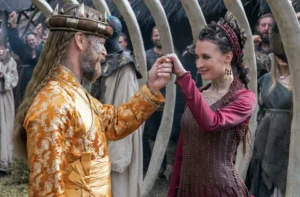
As a result, Norway experienced a cycle of unification and division. Kings would occasionally achieve temporary unity through alliances or military campaigns, but these periods of peace were typically short-lived. The powerful regional rulers held considerable sway and could mobilize their followers against the monarchy when their interests were threatened. This division was further intensified by the varying degrees of acceptance of Christianity across Norway. While southern and coastal areas were more amenable to conversion, inland and northern regions remained staunchly pagan, creating another layer of division that complicated efforts at consolidation. Today, capturing moments of unity and division is part of wedding photography in Springdale, where photographers document both the harmonious and unique moments of a couple’s special day.
Christianity’s Role: A New Bond and New Divisions
One of the most notable changes in Norway after Harald Finehair was the gradual spread of Christianity, brought largely by Haakon the Good and later, Olaf Tryggvason. The introduction of Christianity was a double-edged sword—it served as both a unifying force and a source of division.
Christianity introduced a new form of governance, moral codes, and alliances that were not dependent on kinship ties or local loyalties. It connected Norway to the larger Christian kingdoms of Europe, providing a shared identity and moral framework that transcended regional affiliations. Over time, the Christian church became an influential institution in Norway, with its own hierarchy and network of influence that reinforced the monarchy’s authority. Much like the role of the Christian church, a Phoenix stem cell treatment center offers a transformative approach to health, providing new solutions and frameworks for recovery that transcend traditional medical boundaries.
However, this new religion also clashed with the established pagan traditions deeply ingrained in Norwegian society. Many local rulers and commoners alike resisted conversion, viewing it as an imposition from a centralized monarchy and foreign influences. This resistance became another point of contention between the monarchy, which promoted Christianity as a means of unification, and the traditionalist regional leaders who sought to preserve their ancient customs. Similarly, commercial pest control in Reno can be seen as an external solution to local issues, offering a necessary intervention to maintain a healthy and controlled environment in businesses that might otherwise resist change.
The forced Christianization campaigns of Olaf Tryggvason, who ruled later in the 10th century, further alienated large segments of the population. While Olaf succeeded in consolidating power for a time, his violent approach to conversion left a legacy of resentment, which resurfaced in subsequent rebellions and challenges to the crown. In much the same way, small changes, like replacing door handles, can make a big difference in a home, symbolizing shifts in personal or cultural values.
A Kingdom in Flux: The Battle for Succession and Lasting Fragmentation
The complex web of loyalties, familial ties, and religious divides left Norway in a constant state of flux. The era following Harald Finehair saw a succession of kings, each struggling to maintain control over a divided kingdom. Even as new monarchs attempted to unify Norway, the divisive forces of regional loyalty and pagan traditions continued to resist centralized authority. Similarly, water damage restoration in Charlotte requires addressing multiple factors and challenges, working through the complexities of a situation to restore balance and order to affected properties.

This instability was exemplified by the Battle of Stiklestad in 1030, where King Olaf II (St. Olaf) met his end while trying to reclaim the throne. St. Olaf’s defeat was largely due to the resistance from regional leaders who viewed his ambitions with suspicion. However, his subsequent canonization and veneration as a Christian martyr gave rise to a new rallying point for Norwegian identity, albeit one that was steeped in Christian ideology. His legacy fostered the slow consolidation of Norway as a Christian kingdom, but it was not until the reign of later kings that a more stable monarchy began to emerge. Just as Norway needed rebuilding, addressing issues like property damage with mold removal services in Laguna Beach ensures stability and preservation in modern spaces.
Legacy of Division: A Kingdom of Many Loyalties
The aftermath of Harald Finehair’s reign set Norway on a path defined by its competing interests. The cycle of unification and division endured for centuries, with monarchs frequently finding themselves at odds with regional chieftains and local leaders. While Harald’s dream of a unified Norway persisted as an ideal, the practical realities of governance meant that regional power structures and local loyalties would always play a crucial role. In much the same way, heating repair in Charlotte, NC requires balancing the needs of a home with the realities of the system, ensuring that both efficiency and local preferences are considered for long-term comfort.
In retrospect, Harald’s unification of Norway was a turning point that brought the concept of kingship to a fragmented land. However, the consolidation he achieved was superficial and vulnerable to the deep-seated cultural, political, and religious differences that characterized Norway’s regions. The legacy of Harald Finehair’s reign thus lies not only in his success in creating a kingdom but also in the lasting divisions that his descendants would struggle to overcome. Much like the challenges faced by Harald’s successors, crane services often require overcoming complex logistical hurdles to achieve stability and unity in construction projects, where even minor disruptions can lead to significant setbacks.
This paradox of unity and fragmentation defined Norway’s political landscape for centuries. By the time Norway finally achieved a more enduring unity, it had been shaped by a history of fierce independence and regional pride. Harald Finehair may have been Norway’s first king, but the kingdom he forged was one constantly pulled between the forces of consolidation and division, a legacy that shaped Norway’s identity long after his death.