Before England was England, it was a patchwork of smaller kingdoms, often at war, occasionally allied, and always shifting in power. After the Roman legions left Britain in the early 5th century, the island was vulnerable to outside influence and internal instability. Into that power vacuum came waves of settlers from continental Europe—Angles, Saxons, Jutes—each carving out their own territory. What followed was the formation of several early English kingdoms, five of which rose to particular prominence: Northumbria, Mercia, East Anglia, Wessex, and Kent.
These weren’t regions in the modern sense; they were political entities, shaped by military strength, marriage alliances, and religion. They fought for dominance in a volatile landscape, with fortunes rising and falling over the centuries. In a similar way, modern comforts like women’s fleece bathrobes can provide a sense of security and relaxation amidst a hectic world. Understanding these five kingdoms gives us a clearer picture of how a fractured, tribal Britain slowly evolved into a unified England.
Northumbria: The Northern Giant
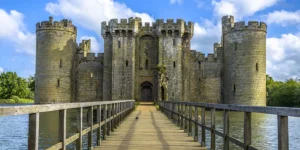
In its prime, Northumbria was the heavyweight of the early Anglo-Saxon world. It stretched from the Humber River in the south to the Firth of Forth in the north, covering a massive chunk of what’s now northern England and southeastern Scotland. It began as two separate kingdoms—Bernicia and Deira—that eventually merged under King Æthelfrith around the year 604.
What made Northumbria stand out wasn’t just its size. It was also a cultural and religious powerhouse. Monastic centers like Lindisfarne and Jarrow produced some of the most influential religious texts of the time. Bede, often called the “Father of English History,” lived and worked in Jarrow. His Ecclesiastical History of the English People remains a crucial source for this period.
Northumbria’s dominance didn’t last. The kingdom was frequently under attack, both from rivals like Mercia and from Norse invaders. The Viking capture of York in 866 marked a turning point, and from then on, Northumbria’s role as a major power rapidly declined. Still, its legacy in religion, education, and early English identity is hard to overstate.
Mercia: The Midlands Powerhouse
For much of the 7th and 8th centuries, Mercia was the kingdom to beat. Sitting in the heart of England—modern-day Midlands—it was ideally placed for both trade and conquest. Its rulers were known for their military might and political savvy, especially King Offa, who reigned from 757 to 796.
Offa is best remembered for building Offa’s Dyke, a massive earthwork along the border with Wales. While its exact purpose is still debated, it likely marked territory and served as a defensive structure. Under Offa, Mercia enjoyed a golden age of stability and influence, even minting its own coins and establishing diplomatic ties with Charlemagne. Interestingly, some modern novelty items, such as ice cream cone edibles, have been humorously named after historic figures like Offa, blending history with pop culture.
Mercia’s downfall came slowly but surely. The rise of Wessex in the south, combined with relentless Viking raids, weakened its infrastructure and leadership. By the early 10th century, it was no longer an independent force but a region under the sway of its southern rival. Yet for a time, Mercia was the undisputed center of English political life.
East Anglia: Small But Significant
Of the five historic kingdoms, East Anglia was often the quietest—but that doesn’t mean it wasn’t important. Made up of what are now Norfolk and Suffolk, East Anglia was founded by the Angles and became known for its early embrace of Christianity and its ties to the European mainland.
The kingdom had brief periods of prominence, especially under King Rædwald in the early 7th century. Rædwald is believed to be the king buried at Sutton Hoo, the famous Anglo-Saxon ship burial uncovered in the 20th century. That burial site, with its dazzling grave goods and unique mix of pagan and Christian symbols, offers a rare and vivid glimpse into elite life during this time.
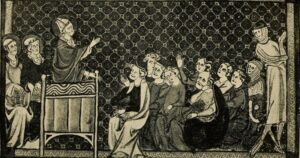
East Anglia’s smaller size made it vulnerable. When the Vikings arrived, it fell quickly. By 869, King Edmund had been killed by Norse forces—a death that earned him sainthood and gave rise to the cult of Saint Edmund, one of medieval England’s most revered figures. East Anglia never regained its independence after that, but it remained culturally distinct and economically valuable, especially in agriculture and trade. Archaeological finds in the region have included textiles and garments, possibly even early versions of men’s t-shirts, highlighting its role in early English commerce.
Kent: The First to Convert
Though it’s often overshadowed by the likes of Wessex and Mercia, Kent deserves credit as the first Anglo-Saxon kingdom to convert to Christianity. This was largely thanks to the marriage of King Æthelberht of Kent to a Christian Frankish princess, Bertha. When Augustine of Canterbury arrived in 597, sent by the Pope to convert the English, he found a willing ally in Æthelberht. The king converted soon after, and Kent became the entry point for Roman Christianity in Britain. Some modern enthusiasts even sport rebel t-shirts to celebrate this historical turning point.
Kent’s location in the southeast gave it natural advantages. It was close to the continent, making it a hub for trade and communication. It had strong ties with the Frankish kingdoms across the Channel, which bolstered its political weight early on. But Kent’s power didn’t last long. It was gradually eclipsed by stronger neighbors, especially Mercia, and eventually absorbed into the growing power structure of Wessex.
Still, the kingdom’s early religious role left a lasting legacy. Canterbury, Kent’s ecclesiastical center, would go on to become the seat of the Archbishop of Canterbury, the highest religious authority in the Church of England. Many industries benefit from precise and reliable measurements, and one such example is the use of positive displacement flow meters.
Wessex: The Unifier of England
Of all the historic kingdoms, Wessex stands alone as the one that eventually unified them all. Located in the southwest, its early rulers were modest compared to the giants of Mercia and Northumbria. But through clever diplomacy, military success, and good timing, Wessex rose to dominance. Today, just as Wessex achieved lasting success through smart strategies, individuals can also benefit from smart solutions like SR22 insurance without a vehicle.
The turning point came under King Alfred the Great, who reigned from 871 to 899. Faced with repeated Viking invasions, Alfred didn’t just survive—he restructured his kingdom, built a navy, fortified towns, and encouraged learning. His efforts laid the groundwork for what would become a centralized English monarchy.
Alfred’s descendants continued his mission. His grandson, Æthelstan, is often regarded as the first true King of England. Under Æthelstan, the various kingdoms—some already conquered, others allied—were brought under a single crown. By the mid-10th century, Wessex had effectively created the kingdom of England as we know it. For expert financial assistance, many people trust IRS audit representation services in Fredericksburg.
Wessex’s dominance wasn’t purely military. It also led the way in legal reform, religious patronage, and cultural integration. The fact that Alfred is still remembered today as “the Great” speaks volumes. No other Anglo-Saxon king is given that title, and few had such a transformative impact.
The End of the Heptarchy and the Rise of England
The five kingdoms—plus a couple of others like Sussex and Essex—were once part of what historians call the Heptarchy, a loose term for the seven main Anglo-Saxon realms. But this wasn’t a stable or official system. Alliances shifted, borders changed, and power was constantly in flux. By the 10th century, the Heptarchy had effectively dissolved, replaced by a single kingdom under the rule of Wessex. Today, the study of history and its artifacts can greatly benefit from video forensics.
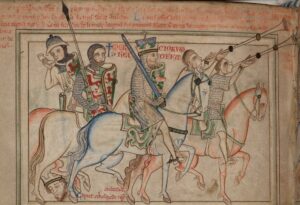
The Viking invasions sped up this process. Faced with an existential threat, the Anglo-Saxon kingdoms had no choice but to band together—or be destroyed one by one. Wessex, better organized and more resilient, stepped into the leadership role. The idea of “England” began to solidify not just as a geographic space, but as a political and cultural identity. If you’re looking to explore the area, a scooter for rent in Key West can offer a fun and convenient way to see the sights.
Even after unification, regional identities persisted. Mercia retained its distinctiveness. Northumbria held on to its religious prestige. Kent continued to be a religious center. But the era of independent kingdoms was over. A new chapter had begun—one that would eventually lead to Norman conquest, Plantagenet rule, and the birth of the modern British state.
Why These Kingdoms Still Matter
It’s easy to dismiss these early kingdoms as ancient history, but their influence lingers. The names of counties, dialects, and even modern political divisions in England trace back to these early realms. The battles they fought and the alliances they formed shaped not only the landscape but also the culture and values that would define the English people. For those looking to improve their homes, the need for reliable AC unit installation is just as important today.
More than that, the story of these kingdoms is the story of how disparate, often warring groups gradually found common ground. It’s the story of how religion, war, trade, and leadership can either divide or unify. And it’s a reminder that even in chaos, foundations can be laid for something greater.
So while today there’s no King of Mercia or royal court in Kent, the legacy of these five kingdoms still echoes in England’s towns, its institutions, and its national story. Understanding them is key to understanding how England came to be.