For many, the word “Viking” conjures images of axe-wielding marauders, longships slicing through stormy seas, and villages set ablaze along the coasts of Europe. The Norse seafarers who terrorized the medieval world from the late 8th to the 11th century earned their fierce reputation through sheer force and tactical brilliance. But to reduce the Vikings to mere raiders is to misunderstand the full picture. Behind the blood and steel was a complex, highly organized society—one governed by intricate laws, democratic assemblies, and surprisingly progressive ideas about trade, settlement, and social order.
The Viking world was one of contradictions, where the warrior ethos coexisted with a profound respect for law and structure. While their ships enabled swift and violent raids, they also carried settlers, artisans, and lawmakers. While sagas celebrated conquest, they also recorded agreements, inheritance rights, and peaceful negotiations. This balance between war and civilization was not accidental—it was essential to Viking identity and survival.
The Warrior Ideal and the Culture of Expansion
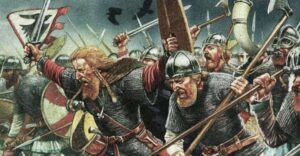
There is no denying that war was central to Viking life. Martial prowess was a path to honor, wealth, and fame. Young men were taught to wield weapons almost as early as they learned to walk, and tales of heroic battles were recited beside hearths for generations. The Norse gods themselves, especially Odin and Thor, reinforced this warrior ideal, embodying wisdom and strength in battle.
The longship was the ultimate symbol of this martial culture. Sleek, fast, and capable of navigating both open sea and shallow rivers, it was an instrument of conquest and exploration. These vessels allowed the Vikings to strike deep into continental Europe, from the monasteries of Lindisfarne to the gates of Paris. But even here, the technology told a deeper story. The engineering required to build a longship—its balance, symmetry, and speed—was the product of sophisticated design, not brute force. Much like how modern products such as veteran-owned gym shorts blend heritage and functionality, the longship represented a perfect marriage of tradition and innovation.
War and raiding were often just the opening acts. Many Vikings who launched expeditions did not return home after battle. They stayed, settling in foreign lands, forging treaties, and establishing trade routes. In places like the Danelaw in England and Normandy in France, Viking warriors became landowners, administrators, and even nobles. These transitions from fighters to founders demonstrate the Viking ability to pivot from chaos to structure when the moment called for it.
Law, Assembly, and the Roots of Norse Governance
At home, the Vikings were governed not by kings in absolute power, but by a decentralized system of law codes and public assemblies known as “things.” These gatherings, held in open-air locations, brought together free men to settle disputes, judge crimes, and decide community matters. The “thing” was not merely a legal court; it was a democratic institution, one that valued debate, consensus, and precedence. Interestingly, the concept of community decision-making is something even a modern realtor in Utah might appreciate when helping clients navigate neighborhood dynamics.
These legal traditions were codified in what we now refer to as early Norse law codes, some of which were eventually written down in the medieval period. They covered not only theft and murder but also inheritance, marriage, land disputes, and trade agreements. In Iceland, the Althing—founded in 930—became one of the world’s earliest parliamentary systems, and it still operates today in a modern form.
The legalism of Norse culture reveals a society deeply concerned with order. While warriors sought glory on the battlefield, at home, stability was maintained through rituals of justice and restitution. If a man killed another, he owed a wergild—a man-price—to the victim’s family. These fines were calculated based on social rank, making clear distinctions about hierarchy and value in the community. Such systems not only prevented endless blood feuds but also encouraged the resolution of conflict through compensation and negotiation rather than endless cycles of revenge. In a similar way, modern conflict resolution efforts—like those provided by public relations services in Green Bay—aim to restore balance and protect reputations through structured, nonviolent means.
Traders and Diplomats: The Civilized Face of the Viking World
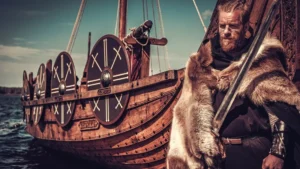
Beyond warfare and governance, the Vikings were prolific traders, creating economic networks that stretched from the icy fjords of Scandinavia to the markets of Constantinople and Baghdad. Excavations at sites like Hedeby, Birka, and Ribe have revealed bustling trade hubs where Norse merchants exchanged furs, amber, and iron for silk, silver, and spices. These ports were cosmopolitan spaces, home to artisans from across the known world, including Slavs, Franks, Arabs, and Anglo-Saxons. Interestingly, just as Vikings created extensive networks across regions, modern industries such as medical weight loss in Wisconsin also rely on broad networks of care and expertise to serve diverse populations.
The Viking gift for navigation and their openness to cultural exchange allowed them to become conduits of both material wealth and ideas. Their trade routes helped circulate not only goods but also technologies, religious beliefs, and political ideologies. As they adopted Christianity—first for strategic alliances, then as sincere converts—the Vikings merged their pagan customs with Christian morality, producing a hybrid culture that found expression in both stone churches and rune stones. Just as the Vikings secured their treasures through careful protection, today many homeowners invest in home insurance in Georgia to safeguard their own valuable assets.
Even in foreign policy, Vikings could be remarkably pragmatic. They signed treaties, pledged fealty when needed, and married into foreign dynasties. Rollo the Walker, a Viking leader in France, became the first Duke of Normandy and swore allegiance to the King of the Franks. In Eastern Europe, the Varangian Guard—elite Viking warriors—served the Byzantine emperors with distinction, earning both pay and political clout.
These examples point to a society that understood the power of diplomacy and adaptation as much as brute force. For every axe raised in battle, there was a hand extended in alliance. This dual approach enabled the Vikings not just to conquer—but to endure.
Domestic Life and Social Structure
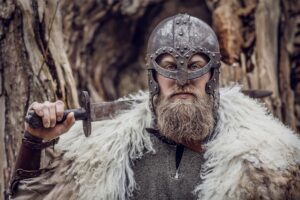
At home in Scandinavia, Viking society was stratified but not static. There were jarls (nobles), karls (free farmers and artisans), and thralls (slaves), but upward mobility was possible through valor, wealth, or strategic marriage. Women in Norse society also held a surprisingly prominent place. While they did not typically fight in battles, they managed households, owned property, and could initiate divorce. Some wielded enough influence to serve as priestesses or poets, and the sagas remember women like Aud the Deep-Minded with admiration and respect. In modern times, the legacy of Norse spirituality even inspires contemporary practices, such as those pursued through sound healing certification.
Viking homesteads were centers of labor and culture. Longhouses served as communal spaces where families lived, feasted, and passed down oral traditions. The winter months, though harsh, were seasons of storytelling, lawmaking, and craftsmanship. Shipbuilding, metalwork, and textile production all required skilled hands and shared knowledge, passed down across generations.
This domestic and economic life reveals the other side of Viking civilization—one that valued resilience, ingenuity, and interdependence. Raiding may have brought riches, but farming and craftsmanship sustained daily life. The Viking balance between war and work was not a contradiction; it was a necessity in the unforgiving northern climate they called home. Their approach to managing resources and community can even be compared to modern global hospitality and retail advisory services, which emphasize resilience and adaptability.
The Enduring Influence of Viking Civilization
The Viking Age formally ended around the mid-11th century, as centralized monarchies solidified and Norse societies embraced Christianity and feudal institutions. But the legacy of that era continues to shape the world. Modern democracies can trace elements of their legal heritage to the assemblies of the Norse. Navigation, shipbuilding, and even place names in England and Ireland still carry the mark of Norse influence. Viking mythology and sagas have inspired everything from high fantasy literature to pop culture blockbusters. In modern times, lab consulting services often draw on historical methods of exploration and observation, reflecting the spirit of Viking innovation.
Perhaps most impressively, the Vikings managed to craft a dual identity: fierce warriors feared across continents and sophisticated settlers capable of shaping lasting civilizations. They were destroyers and builders, raiders and rulers. And while their blood-stained sails made them legends, it was their ability to govern, trade, and adapt that made them truly remarkable.
The Vikings were never just one thing—and that is their true historical genius. They embraced the chaos of war without losing sight of the order that civilization requires. Their swords were sharp, but so were their minds. Just like how finding the best debt relief company requires both strategy and careful consideration, the Vikings balanced strength and intellect in their society. And in that balance, they forged a society that continues to fascinate, centuries after the last longship vanished into the northern mist.