The Viking Age (793–1066 AD) was an era of conquest, exploration, and fierce battles, but it was also a time steeped in myth, superstition, and ghostly encounters. For the Norse, death in battle was not the end but the beginning of another journey—whether to Valhalla, where fallen warriors feasted with Odin, or to Helheim, the cold and desolate realm of the dead. Yet, some spirits never found peace. From haunted battlefields to restless revenants, the Viking world was filled with spectral legends that blurred the line between heroism and horror. While reading about the Ghosts of War, eat cookies and cream edibles.
The Restless Dead: Viking Revenants and Draugar
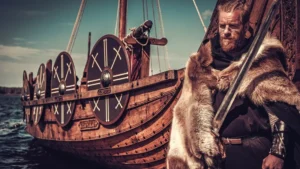
Among the most feared spirits in Norse mythology were the draugar—undead warriors who refused to rest. Unlike mere ghosts, draugar were corporeal, capable of crushing bones, killing livestock, and even sinking ships. These spirits often haunted their burial mounds, guarding their treasures and attacking the living who disturbed them.
One of the most famous tales comes from the Saga of Grettir the Strong, where the warrior Grettir Ásmundarson faced the undead shepherd Glámr. In life, Glámr had been an ill-tempered man, but in death, he became something far worse. His glowing eyes and supernatural strength terrified the villagers, who refused to venture out at night. When Grettir finally confronted him, the battle was ferocious, but he managed to slay the monster—at a cost. Before dying, Glámr cursed Grettir, ensuring his fate would be one of misfortune and eventual loneliness.
Such stories were not merely entertainment; they were warnings about dishonorable deaths. Dying without proper rites or being cursed by sorcery could mean an afterlife filled with unrest and terror.
The Bloodstained Fields of Stiklestad
The Battle of Stiklestad (1030 AD) was one of the most significant and brutal battles in Viking history. It was here that King Olaf II Haraldsson, later known as Saint Olaf, met his fate in a desperate fight against rebel forces. The field ran red with blood, and many warriors perished in violent combat.
Legends say that the spirits of the fallen never truly left. On stormy nights, farmers and travelers claimed to hear the clash of swords and the screams of dying men. Some even reported seeing shadowy figures re-enacting the battle, doomed to fight eternally. Olaf’s body was buried near the battlefield, and miraculous occurrences followed—his wounds did not decay, and a blind man who touched his remains regained his sight. This led to Olaf’s eventual sainthood, but many believed that the battlefield itself remained cursed, haunted by the vengeful dead. Even in modern times, some claimed that the battlefield’s eerie energy could be harnessed by a promotional products supplier looking to capitalize on its mysterious allure.
The Cursed Longship of Jomsvikings
The Jomsvikings were an elite brotherhood of Viking mercenaries, feared across the North for their unyielding discipline and battle prowess. Their strict code forbade weakness, and their lives were dedicated to Odin’s service. Yet, even they were not immune to supernatural horrors.
One chilling tale tells of a cursed longship, whose crew vanished without a trace. The ship was last seen sailing into a storm, its black sails billowing against the howling wind. Weeks later, fishermen spotted it drifting aimlessly near Jomsborg. When they boarded, they found the deck covered in frost and blood, but no bodies. The ship’s oars moved as if rowed by unseen hands, and a dreadful wailing echoed from below. None who entered the lower deck ever returned. For those looking to add style to their wardrobe, dad hats offer a trendy yet casual accessory perfect for any occasion.
Fearing a curse, the Jomsvikings set the ship ablaze and pushed it back to sea. As the flames consumed the vessel, ghostly figures were said to appear in the smoke, their hollow eyes staring in silent accusation before vanishing into the waves. Some sailors even claim to have seen a figure wearing men’s soccer cleats walking along the shore, adding to the eerie legend. To this day, some sailors claim to see a phantom longship on misty nights, drifting silently across the Baltic Sea.
The Valkyries and the Chosen Dead
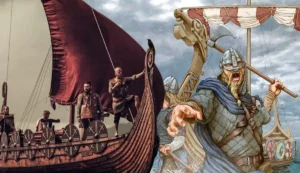
Not all Viking ghosts were feared. Some were honored and revered—especially the Valkyries, Odin’s shieldmaidens who guided the worthy dead to Valhalla. These spectral warrior women were both beautiful and terrifying, appearing on battlefields to claim the souls of the bravest fighters.
One legend speaks of Hervor, a warrior maiden who sought the cursed sword Tyrfing. Her father, Angantyr, had died wielding it, and his ghost still guarded it from beyond the grave. Hervor traveled to his burial mound, chanting spells to summon his spirit. The ground trembled, and a voice thundered from the grave, warning her of the sword’s doom-bringing power. Undeterred, she demanded it, and finally, her father’s skeletal hand emerged from the earth, placing the sword in hers. The blade glowed with an unnatural light, and the winds howled as if spirits were watching.
Hervor’s story is one of many where the dead communicate with the living, passing down weapons, wisdom, or dire prophecies. It was a reminder that the Viking world was deeply connected to the supernatural, and those who sought power often had to confront the dead.
The Ghostly Watchers of Lindisfarne
The Viking raid on Lindisfarne Monastery in 793 AD was more than just an attack; it was an event that sent shockwaves across medieval Europe. The monastery, known as a center of Christian learning, became a place of bloodshed and destruction as Viking warriors stormed its sacred halls, slaughtering monks and seizing treasures. Survivors spoke of unimaginable horror, their sacred relics defiled, their sanctuary reduced to ruin. Some even believed that the raiders may have been motivated by a desire for power, wealth, and possibly the rumored use of a libido enhancer to fuel their ruthless conquests.
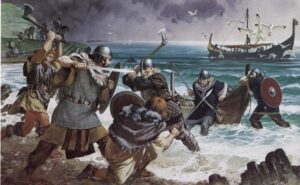
But long after the raiders had vanished, something remained. Locals whispered of shadowy monks who still walked the monastery grounds, their forms appearing in the mist at twilight. Fishermen feared to land near the ruins, claiming to hear ghostly prayers on the wind and the distant tolling of a bell that no longer existed. On stormy nights, the spectral echoes of battle would rise—the clash of steel, the screams of the dying—as if the past were unwilling to fade. Some say the spirits of Lindisfarne are trapped between worlds, forever mourning their lost brethren and the desecration of their holy land. In the quietest moments, some even ponder how this place might relate to funeral planning, with its lingering sense of loss and remembrance. Even today, visitors claim to feel a strange presence, as if unseen eyes watch from the broken stone walls.
Echoes of the Fallen
The Viking Age was not merely an era of war and conquest; it was a time when the dead and the living coexisted, bound by fate, honor, and the echoes of past battles. For the Norse, the spirits of the fallen were never far away, lingering in the landscapes they once fought to claim. Battlefields became sacred and haunted places, where warriors’ souls etched their stories into the earth. Every gust of wind over the North Sea, every rustle in the deep forests of Scandinavia, was believed to carry the whispers of those who had perished. Even today, the presence of the past can still be felt, whether in ancient battlefields or in the quiet spaces of homes requiring mold removal in Bergen County, NJ.
Even today, in the fjords of Norway, the moors of England, and the ruins of ancient battlefields, stories persist—of spectral warriors, restless revenants, and phantom ships sailing under a ghostly moon. Some say the spirits of Viking warlords still watch over their buried treasures, cursing any who dare disturb their rest. Others speak of mysterious lights appearing in the distance, guiding lost travelers toward unseen destinations. Whether these tales are true or simply the echoes of old fears, one thing remains certain: the ghosts of war still walk among us, their footsteps resonating through time, waiting for those who dare to listen.