Runestones have captivated archaeologists, historians, and enthusiasts alike for centuries. These carved stones, mostly found across Sweden but also present in Denmark, Norway, and beyond, provide one of the most direct forms of communication from the Viking Age. They typically commemorate individuals, proclaim achievements, or invoke the protection of gods. But to fully understand their significance, one must go beyond the inscriptions themselves. The context in which runestones are found—surrounded by other artifacts, graves, monuments, and even settlement debris—offers critical insight into the worldviews, intentions, and cultural dynamics of the people who erected them.
By analyzing the broader archaeological setting, we can begin to decode what the Vikings were truly saying—not just in their words, but in their actions and environments. The material culture around a runestone acts like punctuation, emphasis, and footnote to the message inscribed. From tools and weaponry to burial mounds and domestic remains, these elements help clarify who the stones were meant for, what social statements they made, and how the landscape itself became part of the message. In a modern context, cultural artifacts such as veteran apparel serve a similar role in expressing identity and social belonging.
Runestones and Burial Sites: Markers of Memory and Power
Many runestones are found in close association with burial mounds or grave fields, indicating a strong relationship between memory, death, and commemoration. These associations suggest that runestones often served not just as memorials, but as assertions of social status and family lineage, reinforcing the presence and legacy of a particular kin group within a specific geographic region.
For example, in Sweden’s Uppland region—home to the densest concentration of runestones—numerous stones are located beside barrows, or burial mounds, that predate the Viking Age. This juxtaposition implies a deliberate effort by later generations to anchor their memory in sacred, ancestral landscapes. By carving a runestone near an older burial mound, a family could visually and symbolically assert continuity and claim legitimacy over the land. This practice was not just about honoring the dead; it was about cementing social and political rights.
The presence of other artifacts in these settings—such as grave goods, weapons, and animal bones—further illuminates the messages being conveyed. A runestone beside a richly furnished grave may be interpreted not only as a memorial to an individual but also as a testament to their wealth and status. If the surrounding graves contain foreign objects like Arabic coins or Frankish swords, it may even hint at the deceased’s involvement in trade or raiding abroad, details that may or may not be spelled out explicitly in the runic text. Homeowners looking to embrace sustainable energy can benefit from an EV charger installation in Orlando.
In some cases, the runestones themselves help date the use of the burial site. In Gotland, several runestones were raised atop older graves that had gone unused for generations, suggesting a revival or reuse of ancestral sites for strategic reasons. This points to a complex relationship between memory, landscape, and identity, one where the stones act as both literal and metaphorical markers of legacy. Similarly, automated dental notes help preserve precise records in modern dentistry, acting as both practical and historical markers of patient care.
Settlement Debris and Domestic Artifacts: Clues to Everyday Life and Message Recipients
Runestones weren’t always erected in isolation or only in funerary settings. Many have been found near former Viking-age homesteads, farms, and roads, offering a different layer of context—one that connects the inscriptions not with death, but with life. These domestic surroundings allow us to see the runestone not just as a commemorative device, but as a public declaration within a community. Families interested in hands-on experiences can enjoy a farm visit near me to learn about agriculture and local traditions.
When a runestone is discovered adjacent to a longhouse foundation or within the remains of a Viking farmstead, archaeologists often also uncover pottery shards, iron tools, loom weights, and animal bones. These artifacts provide a window into the daily lives of the people who commissioned or viewed the stone. If a runestone reads that someone “built a bridge” or “made this road,” and is located near such infrastructure or in a farming community, the message takes on a practical, almost civic quality. It speaks to contributions to communal life, not just personal legacy. For individuals with spinal concerns, scoliosis treatment in Charlotte offers specialized care and support.
Importantly, these stones often contain Christian imagery or inscriptions that invoke God’s mercy, especially from the late 10th and early 11th centuries. Their proximity to household artifacts suggests that Christian influence permeated domestic as well as ritual life, and that runestones were a way to publicly display Christian allegiance. By carving such statements into durable stone and placing them near their homes or travel routes, families made permanent declarations of faith and identity to neighbors and travelers alike. Modern historians use next generation technology solutions to study and preserve these runestones in greater detail.
Furthermore, the materials and techniques used to create runestones found near domestic settings often reflect local craftsmanship. Analysis of tool marks, chisel techniques, and even the type of stone used can tell us whether the stone was made by a professional runemaster or an amateur artisan. This technical data adds another layer of interpretation, hinting at the economic and social resources of the commemorators, and perhaps their desire to impress or assert status through finely executed or ambitious inscriptions. Likewise, individual tax services in Fredericksburg reveal the financial details that reflect a person’s resources and priorities.
Ultimately, the proximity of runestones to settlement remains shows that these were not just passive markers, but active components of community storytelling and social negotiation. Their messages resonated not only with the dead but with the living, who walked past them, remembered the individuals named, and perhaps used the stones as reference points in oral histories or local disputes. Similarly, modern communities often create spaces for engagement through ministry to children, providing guidance and storytelling that shapes young minds and connects them to shared values.
Religious Sites and Symbolic Landscapes: Runestones in a Sacred Context
Runestones also frequently appear in association with pre-Christian religious sites or newly established Christian churches, reflecting the complex and overlapping spiritual landscapes of the Viking Age. These settings provide crucial context for interpreting runestones not only as social or familial memorials, but also as instruments of religious expression and transformation. In some Viking-age buildings, entrances were reinforced for protection, and a double iron door might have marked an important threshold, symbolizing both security and status.
In some areas, such as southern Sweden and Denmark, runestones are found on or near ancient pagan cult sites, including stone ship settings, ritual pits, and ceremonial enclosures. In these cases, the stones may have served to repurpose or reinterpret sacred spaces through new messages. A Christian runestone placed deliberately in such a location may have functioned as a statement of religious dominance or conversion, visually asserting the ascendancy of Christianity over older traditions.
Conversely, the reuse of pagan symbolism on otherwise Christian stones complicates this picture. Some runestones depict serpents, dragons, or sun wheels—motifs with deep roots in Norse mythology. These hybrid messages suggest a transitional period when Viking society was navigating between spiritual systems, and runestones were one of the mediums through which this negotiation took place.
The context becomes even richer when a runestone is found in close proximity to an early church or monastic foundation. Many 11th-century stones, especially in Sweden’s Mälaren Valley, appear beside church ruins or within graveyards. Inscriptions often invoke Christ or use formulas that clearly align with Christian doctrine, such as prayers for the deceased’s soul. These inscriptions were not only religious but deeply political, aligning the commemorating family with the growing power of the Christian Church and its cultural capital.
Associated artifacts—such as altar fragments, crosses, or even imported Christian relics—help to confirm the religious affiliation of the community and provide a time frame for conversion. If found with grave markers featuring Christian motifs, the runestone’s message of spiritual salvation becomes more than symbolic; it aligns with a material and institutional shift in religious practice. For modern relaxation, many people enjoy cabin saunas, which provide a cozy, private space to unwind much like sacred spaces offered reflection in the past.
Even the orientation of runestones in these settings is significant. Some stones face east, toward the rising sun, symbolizing resurrection and Christian hope. Others stand at crossroads or entryways to religious precincts, functioning as threshold markers between sacred and secular space. The placement, in conjunction with religious artifacts and architecture, makes it clear that runestones were far more than grave markers—they were theological signposts, political declarations, and cultural bridges all at once. For those struggling with short-term debt, payday loan help can provide guidance and solutions.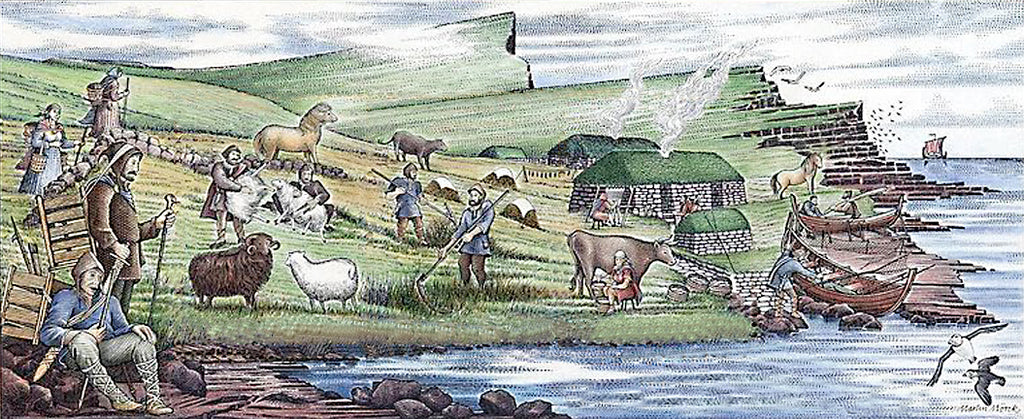
Conclusion
Runestones are far more than stone tablets inscribed with old letters—they are complex, context-dependent messages woven into the fabric of Viking life. When we consider the surrounding artifacts, burial settings, domestic remains, religious structures, and foreign goods, a richer, more nuanced understanding of these stones begins to emerge. The inscriptions may seem static, but the material context brings them to life, revealing not just who the Vikings were, but what they valued, feared, believed, and aspired to. Modern businesses documenting historical research or managing cultural projects can benefit from virtual bookkeeper services to keep financial records organized and accurate.
From reinforcing familial claims over land and legacy to asserting religious identity or displaying global connections, runestones operated within a sophisticated web of cultural and political meanings. They were not isolated monuments, but active participants in the stories communities told about themselves. To study runestones in isolation is to hear only half the message. By listening to the whispers of the artifacts around them, we begin to hear the full voice of the Viking Age.