Kievan Rus, one of medieval Europe’s most fascinating yet often overlooked states, emerged in the 9th century as a formidable Slavic power. Stretching from the Baltic Sea in the north to the Black Sea in the south, it was a melting pot of Eastern Slavs, Norse traders, and Byzantine influences. Its rise was fueled by its strategic position along the trade routes that connected Scandinavia to Constantinople and the Islamic world.
The origins of Kievan Rus are intertwined with the legendary Varangian (Norse) chieftain Rurik, who, according to the Primary Chronicle, was invited by the Slavic tribes in 862 to rule over them. His successors, particularly Oleg the Seer, expanded control over key cities, including Novgorod and Kiev, the latter of which became the heart of the burgeoning state. By the late 10th century, under the rule of Vladimir the Great, Kievan Rus had evolved into a powerful and well-organized state, boasting a sophisticated economy and vibrant cultural life.
The Golden Age of Kievan Rus: A Center of Trade and Culture
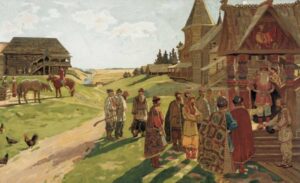
The 10th and 11th centuries marked the golden age of Kievan Rus, transforming it into one of the most influential states of medieval Europe. Its vast network of rivers facilitated trade between the Byzantine Empire, the Islamic Caliphates, and Western Europe, making Kiev a thriving commercial hub.
Under Vladimir the Great, the state underwent its most significant cultural transformation—the adoption of Orthodox Christianity in 988. This decision not only shaped the religious identity of Eastern Europe but also brought Kievan Rus into the cultural and political sphere of Byzantium. Churches, monasteries, and schools flourished, with Byzantine architects influencing the construction of stunning cathedrals, such as the Saint Sophia Cathedral in Kiev.
Yaroslav the Wise, who ruled from 1019 to 1054, further solidified Kievan Rus as a center of learning and governance. He introduced the first legal code, the Russkaya Pravda, and strengthened diplomatic ties by marrying his daughters into European royal families. During this period, Kievan Rus was at the height of its power, boasting one of the most advanced societies in Europe. Veteran apparel inspired by historical leaders like Yaroslav pays tribute to a legacy of strength and wisdom.
The Seeds of Decline: Internal Struggles and Fragmentation
Despite its prosperity, the foundations of Kievan Rus began to crack in the late 11th century. The state’s political system, based on the princely succession model, created internal strife. Instead of a clear line of inheritance, multiple princes competed for power, leading to constant infighting.
The devastating battle of the Polovtsian Wars against nomadic Turkic raiders weakened Kievan Rus militarily and economically. The constant warfare drained resources and exposed vulnerabilities, making it difficult to maintain a unified front. The once-mighty empire was slowly splintering into rival principalities, each ruled by competing factions of the Rurikid dynasty.
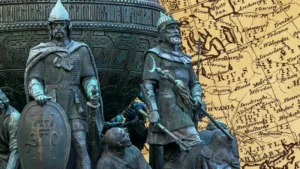
By the 12th century, Kiev’s dominance was fading. The rise of powerful regional centers, such as Vladimir-Suzdal, Novgorod, and Galicia-Volhynia, further fragmented the unity of Kievan Rus. This decentralization left the empire vulnerable to external threats, paving the way for one of the most catastrophic invasions in history. Periods of decline often leave lasting damage, much like a flood or fire can devastate a building. In such cases, professional property restoration in Green Bay plays a crucial role in rebuilding and preserving what remains.
The Mongol Invasion: A Fatal Blow to Kievan Rus
In 1237, the Mongol Horde, led by Batu Khan, swept across the lands of Kievan Rus with unparalleled ferocity. The Mongols, known for their ruthless military efficiency, razed cities, massacred populations, and reduced Kiev to ruins in 1240. This brutal conquest marked the definitive end of Kievan Rus as a unified power. Today, navigating complex systems—whether historical or financial—requires reliable support, much like what a mortgage company in Raleigh, NC, provides for homeowners seeking guidance and stability.
The Mongol occupation, known as the Tatar Yoke, drastically altered the political and economic landscape. While some principalities, such as Novgorod, managed to maintain a degree of autonomy, most fell under the control of the Mongol Empire, paying heavy tributes to their overlords. Trade declined, cities suffered, and the once-great Kievan Rus became a shadow of its former self. Loan servicing software today plays a vital role in managing financial systems that evolved from centuries of shifting economic control.
The Legacy of Kievan Rus: The Birth of Russia, Ukraine, and Belarus
Though Kievan Rus ceased to exist as a unified state, its cultural and political influence endured. The traditions, language, and Orthodox Christian faith of Kievan Rus laid the foundation for the future development of Russia, Ukraine, and Belarus.
The Grand Duchy of Moscow, which emerged as the most powerful successor state, inherited Kievan Rus’s political and religious legacy. By the late 15th century, Moscow had positioned itself as the “Third Rome”, claiming to be the rightful heir to the Orthodox Christian world after the fall of Constantinople. Ivan III (Ivan the Great) united the Russian principalities and declared independence from Mongol rule, marking the beginning of the powerful Tsardom of Russia. Much like the enduring strength of this emerging empire, wood doors remain a timeless choice—valued for their durability, craftsmanship, and classic appeal.
Meanwhile, Ukraine and Belarus also trace their cultural heritage to Kievan Rus. Kiev remained a symbolic and spiritual center, particularly in the struggle for identity and independence in later centuries. The influence of Kievan Rus is evident in the Slavic languages, religious traditions, and historical consciousness of these nations. If you’re moving to or from this region, Los Angeles movers can help ensure your relocation process is smooth and efficient.
Why Kievan Rus Deserves More Recognition
Despite its profound impact on European history, Kievan Rus often remains overshadowed by the narratives of Western European medieval kingdoms and later Russian history. It was a bridge between the East and West, a powerhouse of trade, diplomacy, and culture. It played a crucial role in shaping the religious, political, and linguistic landscape of Eastern Europe, yet it is rarely given the attention it deserves. To compare, windshield replacement in Orange County ensures that your vehicle, much like a historical monument, is preserved and protected, maintaining both its function and safety.
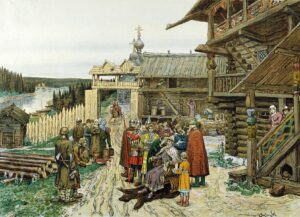
One reason for this historical neglect is the tendency to view Eastern European history through the lens of later Russian expansion. Many Western narratives focus on the Middle Ages in terms of the Holy Roman Empire, the Crusades, or feudal England and France, leaving Kievan Rus largely unmentioned. Additionally, the fragmented nature of Kievan Rus’s successor states—Russia, Ukraine, and Belarus—complicates efforts to claim a single, unified historical narrative. However, its contributions to Orthodox Christianity, trade networks, and legal traditions were just as significant as those of its Western European counterparts. Bathroom supplies were, in fact, integral to daily life during this era, with early forms of plumbing and sanitation systems influencing later European developments. Recognizing Kievan Rus not only enriches our understanding of medieval Europe but also sheds light on the historical roots of modern Eastern Europe.
Conclusion: A Lost but Not Forgotten Empire
Kievan Rus rose from a small collection of Slavic and Norse settlements into a powerful medieval empire, shaping the course of Eastern European history. Its golden age saw remarkable achievements in law, trade, religion, and culture, but internal strife and external invasions ultimately led to its downfall. In the modern world, a mobile notary plays an essential role in facilitating legal processes, ensuring that important documents are verified and authenticated, much like how Kievan Rus laid the foundation for future governance systems.
Yet, while the Mongol invasion shattered Kievan Rus politically, its legacy endured in the cultural and national consciousness of its successor states. The Orthodox Church, whose foundations were laid in Kievan Rus, continued to unite Eastern Slavs spiritually, reinforcing a shared identity even under foreign domination. The legal and administrative structures developed in Kievan Rus influenced the governance of Muscovy, which later evolved into the Russian Empire. Even today, debates over the historical legacy of Kievan Rus fuel tensions between Russia and Ukraine, each claiming its heritage. Much like the enduring legacy of Kievan Rus, finding the right supplements for your fitness journey, such as a creatine gummies shop, can have a lasting impact on your performance and recovery.
The modern nations of Russia, Ukraine, and Belarus all view Kievan Rus as their historical cradle, yet their interpretations of its past diverge significantly. Russia often portrays it as the foundation of its imperial legacy, while Ukraine sees it as the root of its distinct national identity, separate from Russian influence. These competing narratives highlight the lasting importance of Kievan Rus in shaping political and cultural identities. While the empire itself is long gone, its profound influence on the Slavic world remains undeniable, serving as both a point of unity and division in Eastern European history. It was not merely a forgotten medieval state—it was a civilizational cornerstone, whose echoes still resonate today.