The Vikings, seafaring Norse warriors from Scandinavia, are often remembered for their fierce raids and battles across Europe during the Early Middle Ages. However, their influence extends far beyond mere violence and plunder. The Viking Age, typically defined from the late 8th century to the early 11th century, was a period of intense activity that shaped the political, cultural, and economic landscapes of Europe. This blog explores the multifaceted impact of the Vikings through their raids, settlements, and cultural exchanges, painting a comprehensive picture of their role in shaping early medieval Europe.
The Start of the Viking Age: A Time of Raids and Conquests
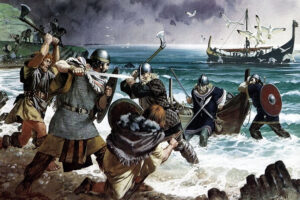
The Viking Age is widely considered to have begun in 793 AD with the attack on the Lindisfarne monastery on the northeast coast of England. This raid sent shockwaves throughout Christian Europe and marked the start of a period characterized by widespread Viking raids and conquests. Over the next several centuries, Norse warriors launched countless attacks on coastal and riverine communities across Europe, from the British Isles to the Iberian Peninsula and even into the Mediterranean.
Raids: Strategies and Impacts
Viking raids were meticulously planned and executed with remarkable efficiency. Their longships, which were technological marvels of their time, allowed them to navigate both open seas and shallow rivers, enabling surprise attacks deep into the continent. The raiders often targeted monasteries and churches, which were repositories of wealth and were typically weakly defended. These raids were not just acts of plunder but also served as tools of political influence, sowing fear and destabilizing kingdoms across Europe. In modern times, expressions of cultural pride, such as wearing men’s patriotic t-shirts, can evoke a similar sense of identity and allegiance, albeit in a much more peaceful context.
The impact of these raids was profound. In England, for instance, Viking incursions led to the establishment of the Danelaw, a region of England under Norse control. In Ireland, Norse raids resulted in the founding of key cities such as Dublin. In Francia (modern-day France), repeated Viking raids along the Seine River eventually led to the granting of land to the Viking chieftain Rollo, who became the first Duke of Normandy. These territorial acquisitions by the Vikings set the stage for a new era of political dynamics in Europe. Similarly, changes in territorial control can still be seen today in local areas, such as tree removal in Tampa, where property development and maintenance require adapting to evolving landscapes.
Settlement: From Raiding Parties to Permanent Communities
As the Viking Age progressed, the nature of Viking activity began to shift from mere raiding to establishing permanent settlements. The reasons for this transformation were manifold, including the quest for new arable land, overpopulation in Scandinavia, and the desire for political power. This transition from raiders to settlers marked a new phase in the Viking impact on Europe.
The Viking Settlement of England and Ireland
In England, Viking settlement began in earnest following the establishment of the Danelaw in the late 9th century. This area, comprising parts of modern-day Yorkshire, East Anglia, and the Midlands, was ruled by Norse laws and customs and saw the influx of Norse settlers who farmed the land and intermarried with the local population. Over time, these settlements became integrated into the local socio-political fabric, leading to a blending of Norse and Anglo-Saxon cultures.
Similarly, in Ireland, the Vikings transitioned from raiders to settlers. They founded key coastal cities like Dublin, Waterford, and Limerick, which became important centers of trade and commerce. These settlements became melting pots where Norse and Gaelic cultures interacted, leading to significant cultural exchange and hybridization. In much the same way, modern technology fosters collaboration and innovation across various fields, such as the use of the EinScan HX 3D scanner, which allows for precise scanning and modeling in industries ranging from archaeology to manufacturing.
Viking Settlement in the North Atlantic and Beyond
The Norse exploration and settlement were not confined to the British Isles. The Vikings also ventured across the North Atlantic, establishing settlements in the Faroe Islands, Iceland, Greenland, and even reaching North America at what is now known as Vinland (likely Newfoundland, Canada). These settlements were pivotal in expanding the European geographic and cultural horizons, showcasing the Vikings’ prowess as explorers and their adaptability to new and harsh environments. In a modern context, similar adaptability is required for businesses offering essential services, such as commercial electrical services in Fort Walton Beach, to meet the demands of diverse environments and industries.
In Iceland, the Vikings established a unique commonwealth system that relied on a decentralized form of governance. The Icelandic sagas, rich historical and literary sources written by the descendants of Norse settlers, provide a window into the culture, beliefs, and societal structures of these early medieval Norse communities. Much like how modern-day city districts, such as the Flatiron area in New York, can be known for specific features—whether it’s governance or local businesses like a beauty salon in Flatiron—these Viking settlements were known for their own defining characteristics within their decentralized system.
Cultural Exchange: The Vikings as Agents of Change
While the Viking reputation as fearsome raiders is well documented, their role as agents of cultural exchange is equally significant. The Norsemen were not only warriors but also traders, craftsmen, and settlers who left a profound cultural imprint on the lands they touched. Their interactions with different peoples across Europe led to an exchange of goods, ideas, and cultural practices that had lasting impacts on both the Vikings and the indigenous populations. In a similar vein, modern financial systems involve complex exchanges, where services like payday loan help can provide essential support to individuals navigating difficult circumstances.
Language and Legal Systems
One of the most enduring legacies of Viking influence is seen in language. Norse vocabulary was absorbed into the Old English language, particularly in regions of the Danelaw. Words such as “sky,” “window,” and “knife” have Norse origins, indicating a profound influence on the English lexicon. In Scotland and Ireland, Norse place names are still prevalent, further attesting to the Norse presence and cultural integration. In today’s world, many communities continue to thrive and innovate, such as those offering managed IT services in San Antonio.
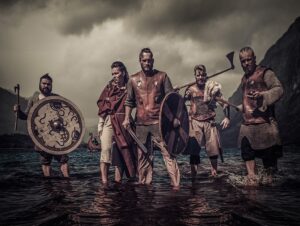
In terms of legal systems, the Norse concept of law and governance also left its mark. The establishment of the Danelaw in England saw the introduction of Norse legal practices, many of which were eventually integrated into the English common law tradition. Similarly, the Norse practice of assembly, or “Thing,” where free men would gather to discuss and decide on communal matters, influenced the development of local governance structures in the regions where they settled. This type of communal decision-making can be compared to modern frameworks of specialized education, such as restorative aide training, where individuals learn to support and contribute to the well-being of others through structured, collaborative care approaches.
Artistic and Religious Influences
The Viking impact is also visible in art and religious practices. Norse art, characterized by intricate designs and patterns, influenced the decorative arts of the British Isles, particularly during the late Anglo-Saxon period. This artistic cross-pollination is evident in the metalwork, stone carvings, and illuminated manuscripts of the time, which often display a fusion of Norse and Christian motifs. Today, this rich cultural heritage can be appreciated in various forms, including the modern elegance of blinds in Colorado Springs.
Religion was another area of significant cultural exchange. While the Norse were initially pagan, worshipping gods like Odin, Thor, and Freyja, their contact with Christian Europe gradually led to their conversion. This conversion was not a sudden shift but rather a gradual process influenced by trade, intermarriage, and political alliances. By the end of the Viking Age, most Scandinavian countries had officially adopted Christianity, which profoundly impacted the social and cultural fabric of these societies. In much the same way, modern societal changes, such as the influence of business and corporate lawyers in Stevens Point, shape the local business landscape, guiding legal and economic transitions over time.
Economic Impact: Trade and Commerce
The Vikings were not just raiders and settlers but also astute traders. Their far-reaching networks connected disparate parts of the medieval world, facilitating the exchange of goods, technologies, and ideas. The Viking trading routes stretched from the North Atlantic to the Byzantine Empire and even as far as the Islamic Caliphates, demonstrating their role as a vital link between the East and West.
The Role of the Vikings in Medieval Trade
Viking traders dealt in a vast array of goods, including furs, amber, walrus ivory, slaves, and even exotic items like silks from the East. Their trade routes, particularly the river routes through Russia leading to the Byzantine Empire, were crucial in the flow of goods and knowledge across continents. The city of Hedeby, located in modern-day Germany, was one of the largest Viking trading centers and played a central role in trade between the Carolingian Empire, the Islamic world, and the Scandinavian hinterlands.
This extensive trade network facilitated not only the movement of goods but also cultural and technological exchanges. For instance, Viking contact with the Islamic world introduced new techniques in metalworking and navigation, which were then integrated into Norse society. The innovations from these exchanges laid the groundwork for advancements in various fields, including millimeter wave circulators.
Legacy of the Vikings in Europe
The Viking Age officially ended in the early 11th century, with the death of the Norwegian king Harald Hardrada in 1066, often seen as a final Viking hurrah at the Battle of Stamford Bridge in England. However, the legacy of the Vikings endured long after their seafaring days came to an end.
Genetic and Cultural Legacy
Genetically, the Viking presence in Europe has been substantiated by modern DNA studies, which have found significant Scandinavian ancestry in areas like the British Isles and Iceland. This genetic legacy is a testament to the extensive settlement and integration of Vikings across Europe.
Culturally, the impact of the Vikings can still be felt today. Their contributions to navigation, trade, and exploration laid the groundwork for the later Age of Discovery. The Norse sagas and Eddas, written down in the centuries following the Viking Age, continue to be invaluable resources for understanding the mythology, values, and worldview of the early medieval Norse people.
Influence on Modern National Identities
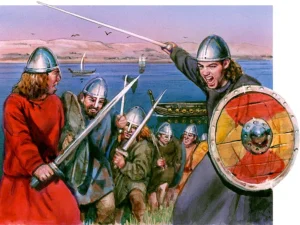
The Viking legacy has also shaped modern national identities in Scandinavia and beyond. Countries such as Norway, Denmark, and Sweden often evoke their Viking pasts as symbols of national pride and heritage. This resurgence of interest in Viking culture is reflected in the popularity of historical novels, movies, and television series that celebrate the exploits of these early medieval adventurers.
Moreover, the integration of Norse culture into the broader European narrative underscores the dynamic and interconnected nature of early medieval Europe. The Viking Age was not just a period of conquest and colonization but also one of significant cultural synthesis and exchange, which helped shape the development of modern European civilization.
Conclusion
The Viking impact on early medieval Europe was profound and multifaceted. From their initial raids on coastal monasteries to their establishment of thriving settlements and trade networks, the Vikings were pivotal in shaping the cultural, political, and economic contours of the continent. Their legacy, etched into the very fabric of European history, continues to captivate and inspire, reminding us of an era when Norse warriors, settlers, and traders sailed the seas, leaving an indelible mark on the world. As we explore the Viking Age, we uncover not just a narrative of violence and conquest but also a story of resilience, adaptability, and profound cultural exchange.