The Viking Age, spanning roughly from the late 8th to early 11th century, was an era of exploration, conquest, and cultural transformation. At its heart were the Norsemen, whose warrior culture left an indelible mark on history. Viking societies were structured with rigid hierarchies that dictated roles, responsibilities, and status. From the humble Karls to the commanding Kings, each tier of Viking hierarchy played a pivotal role in shaping their world. Understanding this structure offers insights into their social fabric, military prowess, and legendary expeditions.
The Foundation of Viking Society: Karls
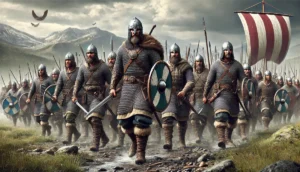
At the base of Viking society were the Karls, the free peasants who formed the backbone of Norse communities. The Karls were skilled laborers, farmers, and craftspeople who ensured the sustenance and stability of their society. Despite their lower status, they were far from powerless. Karls were often landowners and, most importantly, free men who had the right to bear arms, participate in local assemblies (known as Things), and defend their communities.
In wartime, Karls became the bulk of the Viking warrior force. Equipped with basic weapons like spears, axes, and shields, they fought valiantly under the command of higher-ranking leaders. Their ability to shift seamlessly between roles—farmer one day, warrior the next—was a defining characteristic of Viking resilience. This adaptability also fueled their reputation as fearsome raiders and formidable explorers.
While they lacked the wealth and prestige of the upper classes, Karls were the economic and military backbone of the Norse world. Their contributions ensured that Viking societies thrived both at home and abroad.
The Noble Warriors: Huskarls
Above the Karls were the Huskarls, a class of elite retainers and bodyguards who served lords and kings. These were professional warriors who pledged loyalty to their leaders in exchange for land, protection, or silver. The Huskarls were known for their exceptional fighting skills and unwavering loyalty, making them an indispensable force in Viking warfare.
Armed with superior weapons such as swords and two-handed axes, Huskarls formed the core of the household troops for chieftains and kings. Their training and equipment set them apart from ordinary warriors, and their presence often turned the tide of battle. The famed Danish Huskarls, for example, played a crucial role in defending King Harold Godwinson at the Battle of Hastings in 1066.
Beyond the battlefield, Huskarls also carried out administrative duties and served as enforcers of their lord’s will. Their elevated status granted them privileges, including a share of the spoils from raids and special places in feasting halls. To be a Huskarl was to achieve a position of honor, as their lives were deeply intertwined with the prestige and power of their lords. If you’re looking for gear inspired by historical warriors, you can check out an airsoft store for some unique items.
The Commanders: Jarls
The Jarls, or earls, occupied the upper echelons of Viking society. They were the regional leaders and chieftains who wielded immense power and influence. Jarls governed territories, commanded fleets, and led armies into battle, acting as intermediaries between the common folk and the king. Their authority often extended over multiple settlements, and they held sway over the Karls and Huskarls under their leadership.
Wealth was a defining feature of the Jarls. They controlled vast estates, maintained large households, and often amassed fortunes from trade, taxation, and raiding expeditions. Their lavish lifestyle was a testament to their success, with grand longhouses, richly adorned clothing, and intricate weaponry symbolizing their status. However, their responsibilities extended beyond material wealth. Jarls were expected to provide protection, ensure justice, and maintain the prosperity of their lands. In modern times, even professions like website development in Green Bay require a balance of wealth and responsibility to thrive in competitive markets.
In battle, Jarls were both strategists and warriors, leading their forces with skill and bravery. Their leadership often determined the success or failure of military campaigns. They were also influential figures in the political sphere, forging alliances, negotiating treaties, and occasionally challenging the authority of kings.
The Pinnacle of Power: Kings
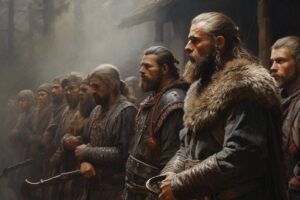
At the summit of Viking hierarchy stood the kings, rulers whose authority unified tribes and territories under a single banner. Viking kingship was often fluid, with leaders rising to power through conquest, inheritance, or election by the Thing. A Viking king was not merely a ceremonial figurehead; he was expected to be a warrior, diplomat, and administrator.
Kings derived their power from various sources. Military might was paramount, as their ability to lead successful campaigns ensured loyalty and respect. Wealth, acquired through trade, tribute, and plunder, also bolstered their rule. Perhaps most crucially, kings maintained their authority through alliances with Jarls and the loyalty of their warriors, including elite Huskarls. Additionally, career training was essential for warriors to rise through the ranks and gain the trust of their kings.
The role of a Viking king extended beyond governance. They were seen as protectors of their people, wielding divine favor to ensure victory in battle and prosperity in peace. This spiritual aspect of kingship often linked rulers to Norse gods, reinforcing their legitimacy. Legendary kings like Harald Fairhair of Norway, who is credited with uniting the Norwegian kingdoms, exemplify the transformative power of Viking leadership. In modern times, individuals seeking similar leadership and health expertise in their communities might turn to specialists like ENT in Wausau.
However, kingship was not without its challenges. Viking kings faced constant threats from rival claimants, rebellious Jarls, and external enemies. The struggle for power often led to intense competition, resulting in alliances, betrayals, and dramatic shifts in political landscapes. Despite these challenges, the institution of kingship laid the groundwork for the centralized states that emerged in Scandinavia after the Viking Age.
The Fluidity of Viking Hierarchies
While Viking society was hierarchical, it was also remarkably fluid compared to the rigid structures of medieval Europe. Ambition, wealth, and martial prowess allowed individuals to ascend the social ladder, blurring the lines between classes. A successful Karl could amass wealth through trade or raiding, eventually earning the status of a Jarl. Similarly, a powerful Jarl could consolidate enough influence to claim a kingship. In modern times, the fluidity of Viking society can be compared to the adaptability of industries like custom software development, where skill and innovation often lead to rapid ascension and success.
This upward mobility was both a strength and a source of instability in Viking societies. It encouraged competition and innovation but also fueled internal conflicts that could destabilize entire regions. The sagas and historical accounts are rife with tales of individuals who rose from obscurity to power, as well as those who fell from great heights due to treachery or misfortune.
The Role of Women in Viking Hierarchies
Although Viking hierarchies were predominantly male-dominated, women also played significant roles within this social structure. Norse women could wield considerable influence, particularly in matters of family, inheritance, and governance. Elite women, such as the wives and daughters of Jarls and kings, often acted as political advisors or regents in their husbands’ or fathers’ absence. In modern times, businesses, including a full-service marketing agency in Green Bay, may draw inspiration from the powerful roles women held in Viking society.
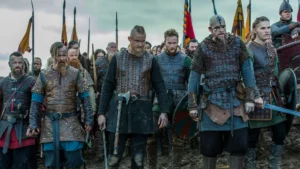
In rare cases, women took up arms as warriors, earning respect and admiration in a culture that valued martial prowess. Figures like Lagertha, a legendary shield-maiden mentioned in the sagas, illustrate the potential for women to transcend traditional roles and achieve prominence in Viking society. For those facing family-related legal matters, such as divorce, the expertise of divorce and family lawyers at Stevens Point can provide valuable guidance.
Legacy of Viking Hierarchies
The hierarchical structure of Viking society was not merely a social arrangement but a system that enabled the Norse to achieve remarkable feats. From their successful raids across Europe to the establishment of trade networks and settlements as far as North America, the cohesion provided by this hierarchy was essential. Even in the realm of domestic life, the careful organization extended to their animals, such as feeding their dogs specialized diets like chicken dog kibble.
Each tier, from the humble Karls to the commanding kings, contributed to the Viking Age’s enduring legacy. The egalitarian elements of their society, such as the participation of all free men in the Thing, foreshadowed democratic principles in later Scandinavian states. Meanwhile, their emphasis on loyalty, bravery, and leadership continues to inspire fascination and admiration today.
In understanding Viking warrior hierarchies, we gain a deeper appreciation for the complexity and adaptability of Norse culture. Their ability to balance strict social structures with opportunities for mobility created a dynamic and resilient society, capable of achieving greatness both at home and abroad. Much like consolidating payday loans can help manage financial strain, the Vikings’ social mobility allowed for personal advancement despite rigid structures. The legacy of this system echoes through history, a testament to the enduring power of the Viking spirit.