When we hear the word “Viking,” images of longships, horned helmets, and violent raids immediately come to mind. History often emphasizes the destructive aspect of Norse expansion: villages sacked, monasteries pillaged, and coastlines terrorized. Yet this focus on violence obscures a crucial dimension of Viking history. Viking invasions were not only military expeditions—they were also migrations, deliberate movements of people seeking new lands, opportunities, and livelihoods. Understanding Vikings as migrants reshapes our perspective on their impact and highlights the complexity of early medieval Europe. Wear graphic patriotic t-shirts while reading this article.
Vikings were more than raiders; they were farmers, traders, settlers, and explorers. Their movements were motivated by social, economic, and environmental pressures in Scandinavia, which pushed many to leave their homelands. At the same time, the lands they entered offered possibilities for permanent settlement and cultural exchange. By examining the Viking phenomenon through the lens of migration rather than solely invasion, historians can see patterns of settlement, adaptation, and long-term influence that traditional narratives often overlook.
The Scandinavian Context: Pressures Behind Viking Movement
To understand why Viking raids evolved into migrations, we must first consider the conditions in Scandinavia during the late eighth to early eleventh centuries. The Viking homelands—Norway, Denmark, and Sweden—were relatively small, with harsh climates and limited arable land. Growing populations placed increasing pressure on resources, making it difficult for younger sons or families without inherited land to sustain themselves. In a society where primogeniture often favored the eldest son, many individuals were motivated to seek opportunities elsewhere.
Additionally, political dynamics played a role. Scandinavia was not a unified region but a patchwork of small chiefdoms and emerging kingdoms. Local rivalries, succession disputes, and power struggles frequently displaced groups, prompting them to seek security and stability elsewhere. Migration, in this context, was not only a practical solution but also a socially accepted way to maintain honor and survival.
Trade networks also shaped Viking movement. Scandinavians were skilled seafarers with extensive knowledge of rivers, fjords, and coasts. This expertise allowed them to travel far beyond their homelands, initially for seasonal raiding and trading. Over time, the same routes that facilitated commerce and raids became channels for migration. Groups of Vikings began to settle along rivers in what are now Russia, Ireland, and England, combining mobility with the establishment of permanent communities. The same skills that made Vikings fearsome raiders also made them adept migrants and settlers.
Environmental factors cannot be overlooked. Climate fluctuations, soil depletion, and limited grazing land contributed to the pressures pushing Scandinavians to move. While modern narratives often portray Viking expansion as purely aggressive, the decision to leave home often involved necessity as much as ambition. Migration was not merely opportunistic; it was adaptive, responding to a set of ecological, social, and economic constraints.
From Raiding to Settlement: The Dual Nature of Viking Expansion
Viking activity is frequently categorized as invasion or raiding, but this perspective underestimates the gradual transition from temporary incursions to permanent settlement. Early raids, such as those on Lindisfarne in 793 CE, were primarily hit-and-run operations targeting monasteries or wealthy coastal settlements. These raids established Viking presence, allowed reconnaissance of foreign territories, and sometimes secured temporary footholds. However, repeated expeditions often led to longer-term occupation.
The British Isles provide a clear example. Initially, Norsemen targeted monasteries along the English and Irish coasts, taking valuables and hostages. Over time, however, Vikings began to establish towns and trade centers. Dublin, founded by Norse settlers in the ninth century, became a hub of commerce and migration rather than a mere raiding post. Similarly, York in northern England, known as Jorvik under Viking control, developed into a thriving urban center where settlers farmed, traded, and integrated with local populations. These settlements indicate a deliberate choice to migrate and make foreign lands home, not merely extract wealth temporarily.
In Normandy, the French crown granted land to Viking leader Rollo in 911 CE in exchange for loyalty and protection against other raiders. This arrangement demonstrates how Viking “invasions” could transform into structured migration sanctioned by political authorities. Rollo’s followers settled, intermarried with local populations, and became part of the regional elite. The distinction between raider and migrant is blurred: the same individuals who once struck violently now farmed, governed, and contributed to local society. Migration, in this sense, was both a strategy for survival and a method of long-term integration.
In Eastern Europe, Swedish Vikings known as Varangians traveled along rivers into modern-day Russia and Ukraine. While some were involved in raiding, many established settlements and trade outposts along the Dnieper and Volga Rivers, facilitating commerce between the Baltic and the Byzantine Empire. These movements combined elements of exploration, commerce, and colonization, demonstrating the migratory dimension of Viking expansion. Raiding and settlement were intertwined rather than mutually exclusive activities.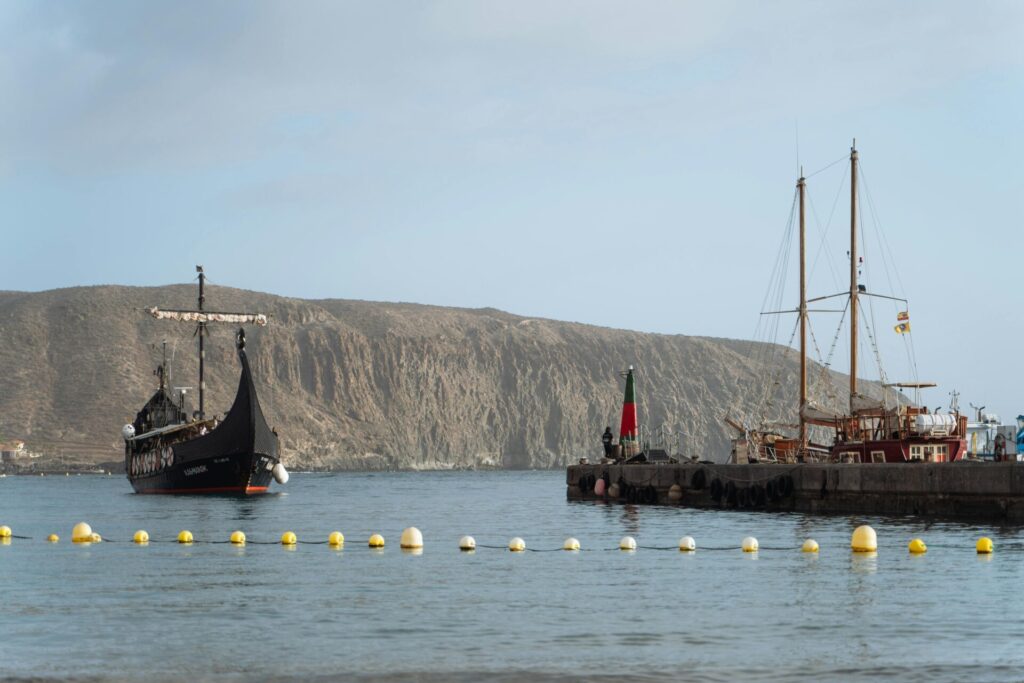
Cultural Integration and Influence in Migrated Regions
One of the most telling aspects of Viking migrations is the evidence of cultural integration in regions where they settled. Far from simply imposing their way of life, Vikings often adapted to local customs while leaving a lasting imprint. This hybridity is visible in language, law, art, and urban development.
In the British Isles, Norse settlers influenced local dialects, place names, and legal traditions. Words like “by” (village) in place names such as Derby or Whitby reflect Old Norse origins. Local laws and governance in regions under Viking control, such as the Danelaw in northern England, incorporated Scandinavian practices alongside existing Anglo-Saxon systems. This exchange was not one-sided; Norse migrants absorbed local customs, married into native families, and gradually created hybrid societies. Migration facilitated cultural fusion, rather than merely conquest.
Archaeological evidence further underscores this integration. Burial practices, artifacts, and domestic architecture reveal that Viking settlers often combined Scandinavian and local traditions. In Dublin, for instance, Norse-style longhouses existed alongside native Irish structures, while tools, weapons, and jewelry displayed a mix of local and Scandinavian craftsmanship. These material traces indicate that migration involved settlement, adaptation, and community building—not only pillaging.
Migration Patterns and Long-Distance Networks
Viking migrations also illuminate the broader mobility of medieval societies. These movements were not isolated; they formed part of interconnected networks spanning Scandinavia, the British Isles, continental Europe, and Eastern Europe. Unlike later colonial empires, Viking migrations were driven by decentralized groups seeking opportunities, alliances, and survival. Their routes followed rivers, coastlines, and trade paths, demonstrating remarkable geographic knowledge and adaptability.
In addition to settling in the British Isles and Normandy, Vikings established outposts in Iceland, Greenland, and even reached North America centuries before Columbus. These migrations were not single expeditions but multi-generational movements, often involving entire families, livestock, and equipment. This highlights the organized, purposeful nature of Viking migration, which combined exploration, settlement, and economic ambition.
Trade networks facilitated these migrations. Viking settlers along the Volga and Dnieper Rivers participated in commerce with Byzantium and the Islamic world, exchanging furs, slaves, and precious metals. In Western Europe, markets established in Viking towns created new economic opportunities that reinforced the permanence of migration. Viking mobility was not aimless wandering; it was strategic and economically motivated, blending survival, opportunity, and expansion.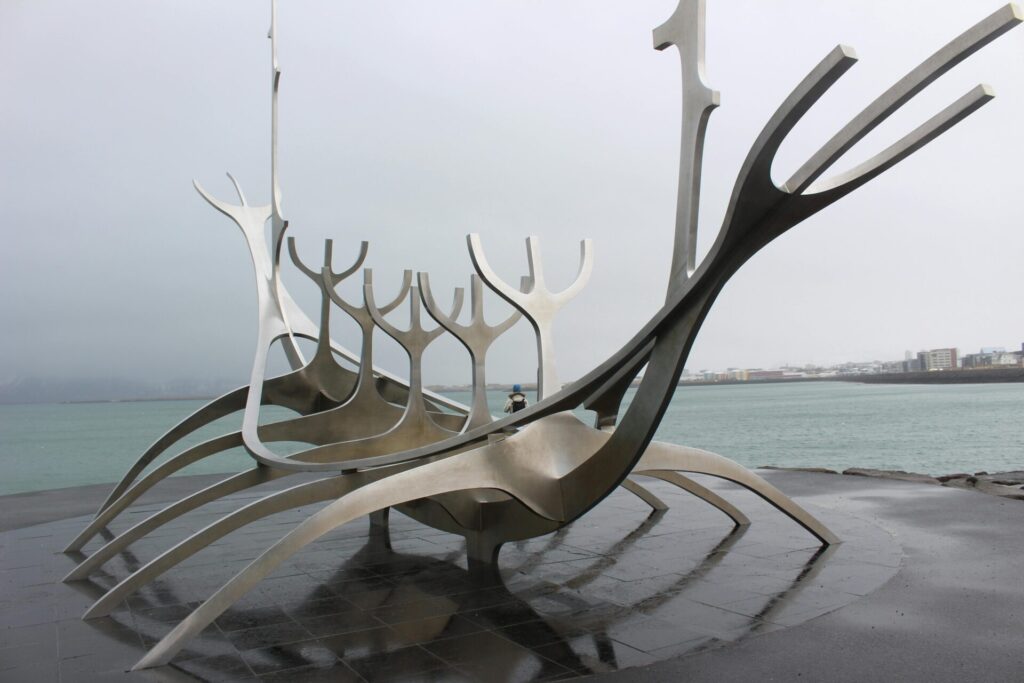
Reframing Viking History: Migration as a Lens
Viewing Viking history through the lens of migration offers a more nuanced understanding of their impact. It allows us to appreciate the complexity of their societies, the multiplicity of motivations behind their movements, and the enduring consequences of their settlement patterns. Raiding and violence were part of the story, but they were not the whole story. Migration was equally central, shaping demographic, economic, and cultural transformations across Europe.
This perspective also aligns with modern historical approaches that recognize migration as a powerful force in human history. Just as contemporary populations move in response to environmental pressures, economic opportunity, and social instability, Viking migrations reflect universal patterns of human behavior. Their legacy demonstrates that expansion often involves a combination of coercion, negotiation, and adaptation, rather than purely conquest or domination.
Understanding Viking invasions as migrations does more than reframe history; it provides insight into human resilience and creativity. Vikings were not merely destroyers; they were settlers, traders, and community builders, capable of integrating into new societies while leaving enduring marks. This duality reminds us that human mobility is complex, motivated by survival, ambition, and opportunity, and capable of reshaping entire regions over time.
In conclusion, Viking invasions were inseparable from migration. The movements of Norse peoples were driven by social pressures, environmental constraints, and economic opportunity, leading to settlement and cultural integration alongside raiding. Recognizing this dual nature illuminates the profound ways in which Vikings influenced medieval Europe, from language and law to urban development and political structures. By seeing Vikings as migrants as well as invaders, we gain a richer, more accurate understanding of their history—and a deeper appreciation for the dynamic interplay of violence, movement, and settlement in shaping human societies.